As an Amazon Associate, we earn from qualifying purchases. Some links on this site are affiliate links at no extra cost to you. Our recommendations are based on thorough research and editorial judgment.

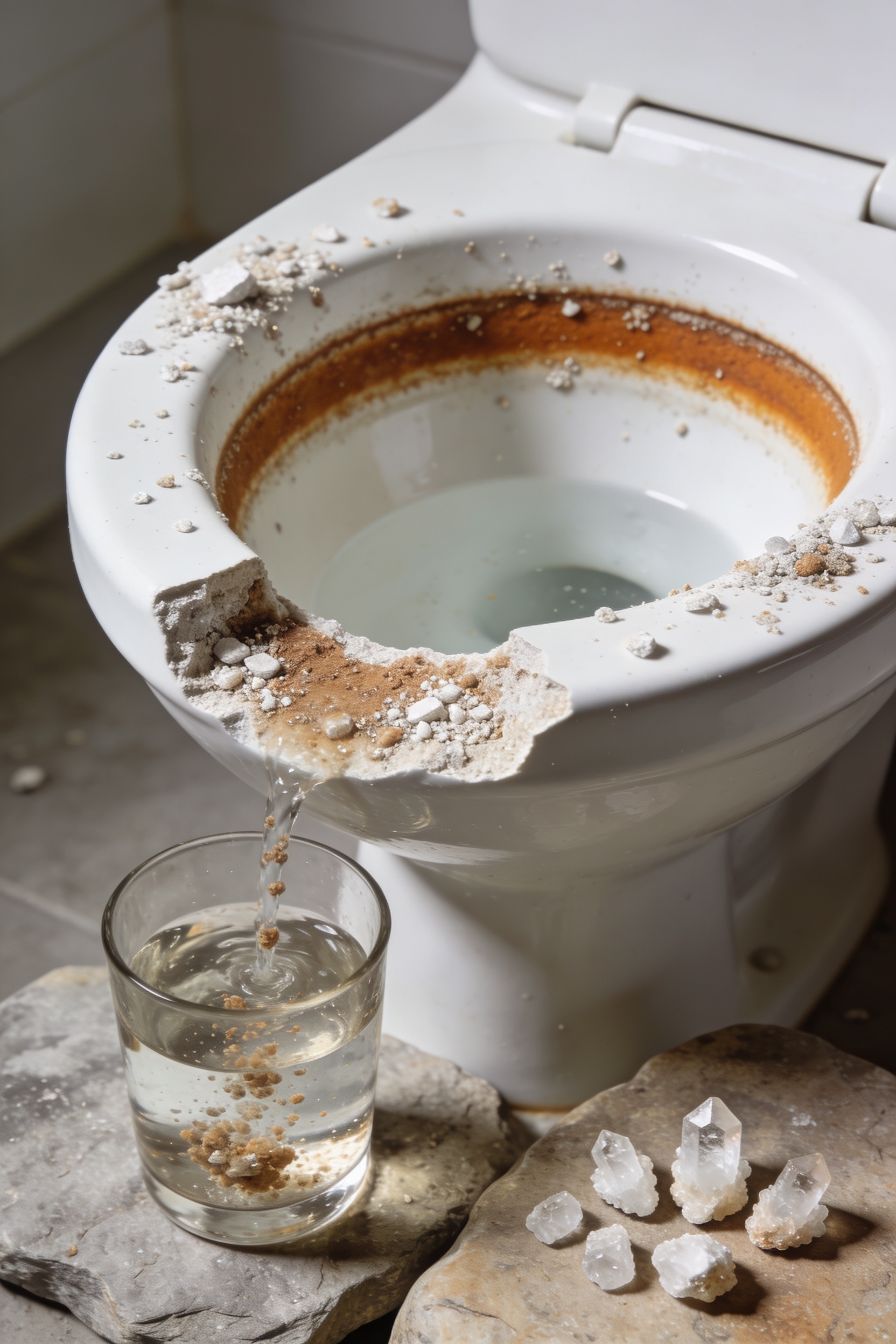
Why Does Hard Water Leave Toilet Bowl Rings?

Hard water leaves those stubborn rings because minerals like calcium and magnesium concentrate right at the waterline where evaporation pulls them, then crystallize and bond chemically to your porcelain’s porous surface. Once they harden, they’re basically stuck—bleach won’t touch them, and scrubbing just scratches the bowl and makes things worse. You need acid-based cleaners to actually dissolve the deposits, but here’s the thing: prevention through water softening or maintenance tablets stops the whole mess before it starts.
Key Takeaways
- Hard water contains calcium and magnesium minerals that precipitate and adhere to toilet bowl surfaces as water evaporates.
- Surface tension pulls minerals toward the waterline where they concentrate and crystallize into visible rings with each flush.
- Evaporation and airflow patterns cause mineral deposits to accumulate precisely at the waterline, creating a distinct band of buildup.
- Minerals embed into porcelain’s microscopic pits and valleys, forming chemical bonds that harden and resist removal over time.
- Repeated flushing deposits fresh mineral layers progressively, causing stubborn scale that becomes increasingly difficult to remove without treatment.
How Hard Water Minerals Create Toilet Bowl Stains
When water sits in your toilet bowl, it’s basically just waiting to cause trouble—and I’m sure you’ve noticed those stubborn rings that seem to mock every cleaning attempt you make. Here’s what’s actually happening: your water contains dissolved minerals like calcium and magnesium that don’t want to stay dissolved. As water evaporates, surface tension pulls these minerals toward the waterline where they crystallize and harden onto the porcelain. The porous nature of that ceramic means mineral crystallization grips tight into microscopic pits. Every flush adds fresh mineral layers, and before you know it, you’ve got this ring that laughs at regular soap and water. Products like sustained-release tablet technology can help prevent future buildup by providing continuous cleaning protection between manual scrubbing sessions. That’s why you need acid-based cleaners—they’re basically the only thing tough enough to break down that calcified mess.
Recommended Products
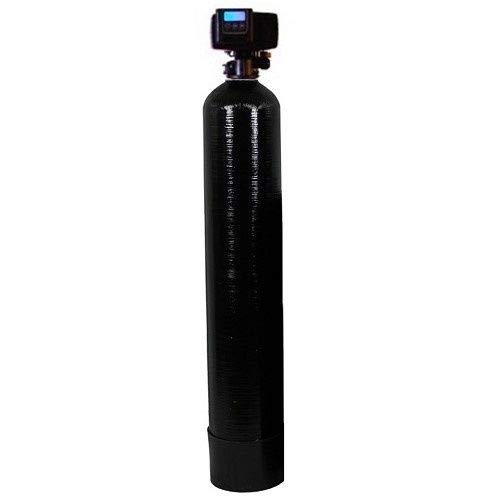
DuraWater, Black Series HD Digital air injection system

POWERFUL CLEANING PERFORMANCE: Effectively tackles buildup in hard-to-reach areas of cooling systems, restoring peak performance. A must-have solution for commercial, residential, and industrial maintenance professionals.

One-piece toilets integrate the tank and bowl into a seamless, easy-to-clean design
Why Stains Form Specifically at the Waterline
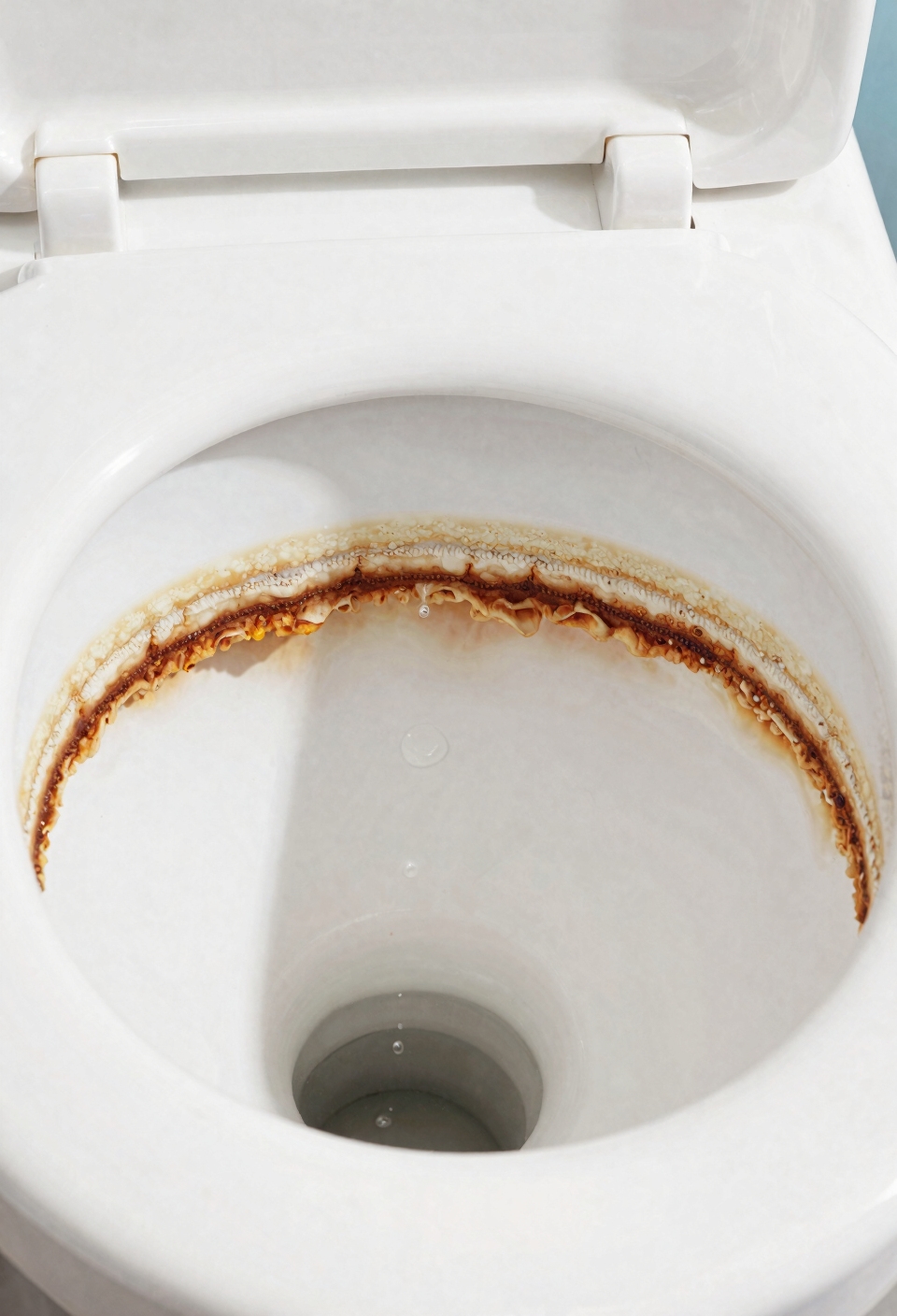
As water evaporates from your toilet bowl, it doesn’t disappear evenly—it leaves behind a concentrated band of minerals right at the waterline, and that’s where you’re going to see those rings form most aggressively. I’m sure you’ve noticed those stains seem to hover exactly where the water sits, and there’s actual science behind that. Airflow patterns around your toilet create zones of faster evaporation, particularly at that waterline. The minerals don’t distribute randomly; they settle exactly where water meets air, thanks to what I’ll loosely call waterline biology—basically, that’s ground zero for mineral concentration. Every flush deposits fresh minerals there, layering them until you’ve got this stubborn ring that regular cleaners can’t touch. These hard-water deposits are particularly resistant to standard toilet brushes and require specialized descaling solutions to remove effectively. It’s a perfect storm of chemistry and physics working against your bathroom’s cleanliness.
The Hardening Process: Why Rings Get Tougher Over Time
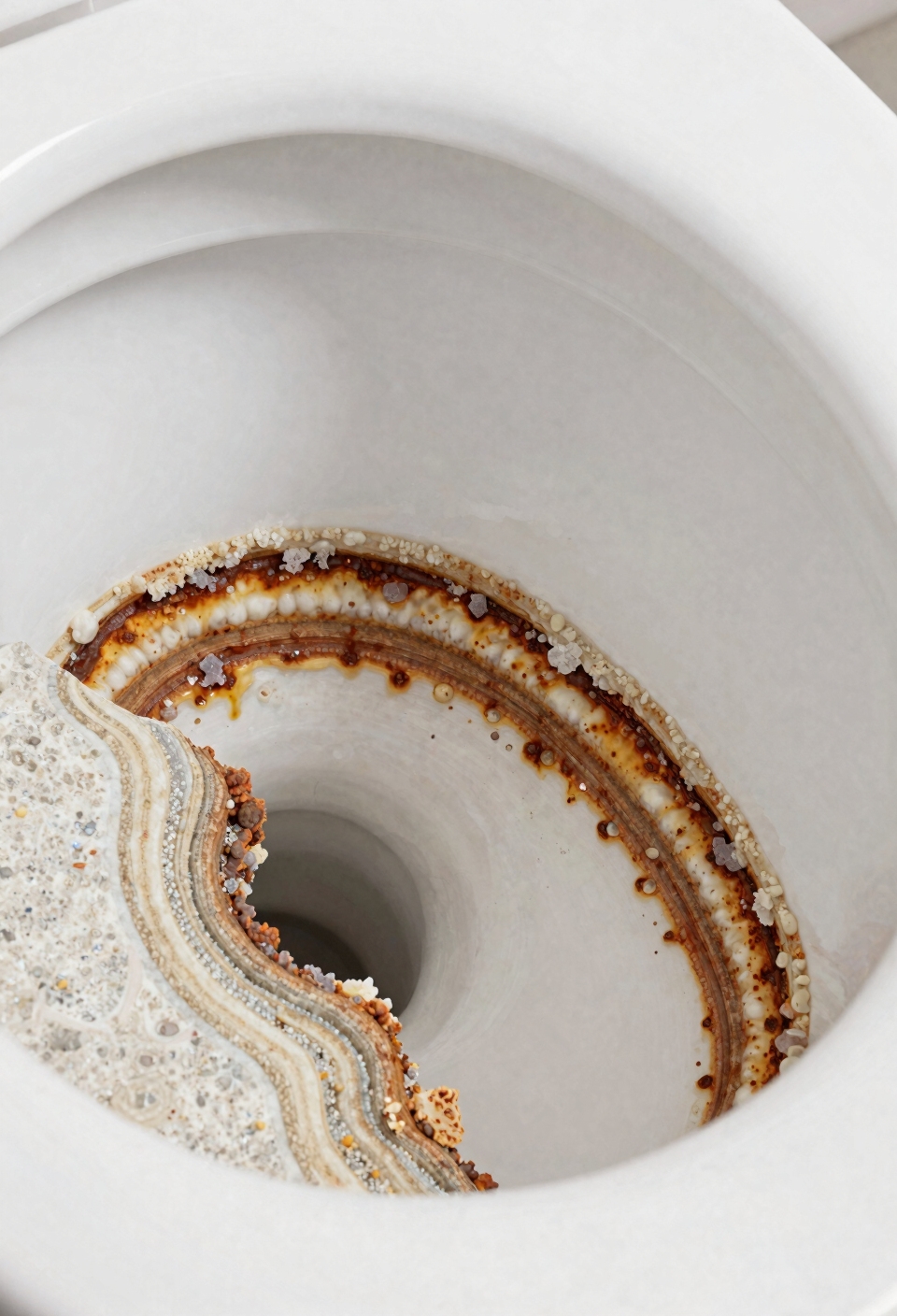
you’re not dealing with surface grime anymore. You’ve got hardened scale that’s basically fused to the bowl. Without acid-based cleaners breaking down that chemical bond, you’re just spinning your wheels. The longer you wait, the tougher your opponent becomes. Citric acid formulations are particularly effective at dissolving these mineral deposits because they target the calcium and lime buildup at a molecular level, making early intervention crucial for easier maintenance.
Recommended Products

Quickly Removes Rust, Dissolves Organic Stains And Cleans Hard Water Residue

Fast-acting solution quickly kills bacteria from surfaces

Use on toilet bowls and urinals to clean common restroom soils, rust deposits and scale
Why Hard Water Rings Cling to Porous Porcelain
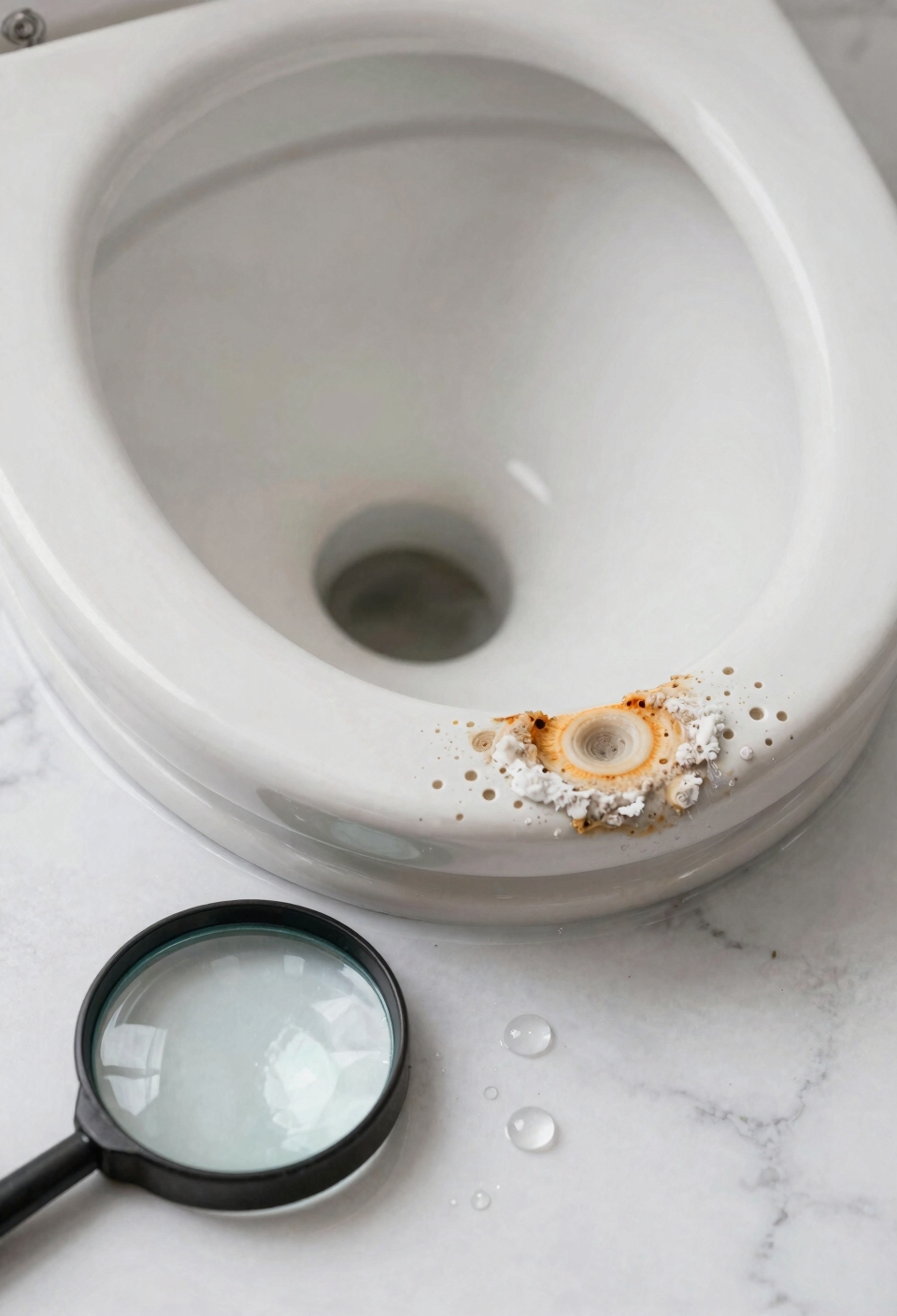
Here’s the thing about porcelain—and I’m sure you’ve noticed this if you’ve ever looked at a toilet bowl under decent lighting—it’s not nearly as smooth as it looks to the naked eye. Under magnification, the porcelain microstructure is basically tiny valleys and ridges everywhere. Those mineral deposits? They’re not just sitting on top like dust. They’re actively embedding themselves into those microscopic pores through surface absorption, effectively getting locked into the material itself. I mean, that’s why your standard scrubbing barely makes a dent. Once those calcium and magnesium particles wedge into the porcelain’s porous network, they’re gripping tighter than you’d think possible. It’s frustrating, honestly—your toilet bowl becomes this mineral trap that only acid-based cleaners can really penetrate and dissolve. To effectively remove these stubborn deposits, products formulated with citric acid or other acidic ingredients work by dissolving the mineral buildup rather than relying on mechanical scrubbing alone.
Why Bleach and Scrubbing Don’t Remove Hard Water Rings
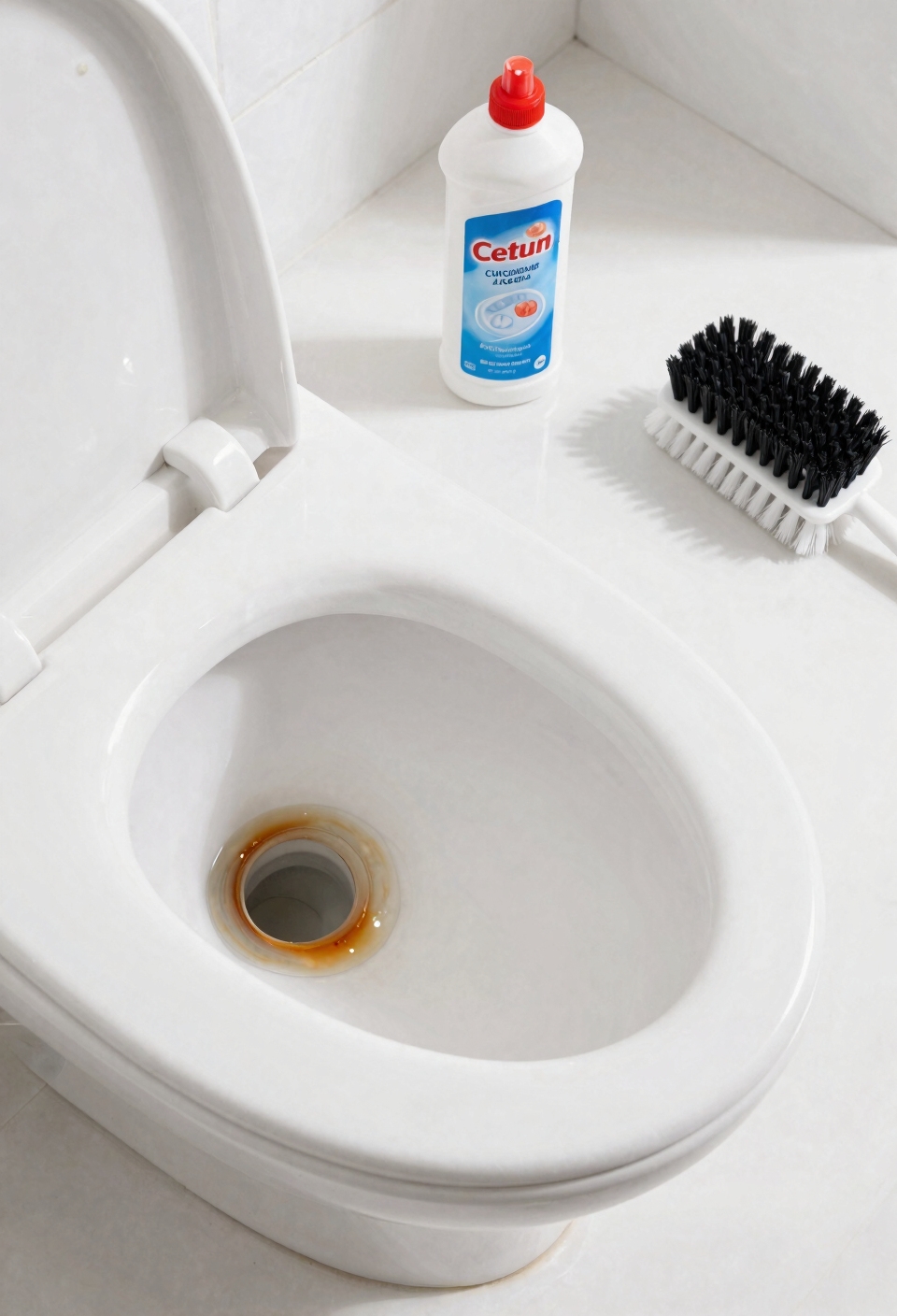
Now, I know what you’re thinking—if those mineral deposits are locked into the porcelain like I just described, why not just blast them with bleach and a stiff brush? Here’s the thing: bleach ineffectiveness against hard water rings comes down to chemistry. Bleach kills bacteria and whitens, sure, but it doesn’t dissolve minerals. You’re basically throwing a disinfectant at a mineral problem—wrong tool entirely.
Plus, aggressive scrubbing with abrasive damage risk actually makes things worse. You’ll scratch that porous porcelain surface, creating more micro-pits where minerals burrow deeper. I mean, you’ve probably noticed how scratched-up toilet bowls seem to stain faster anyway. What you really need is acid-based cleaners that chemically break down calcium and magnesium deposits, with formulas containing hydrochloric acid proving particularly effective for severe stains. That’s where the actual magic happens.
Recommended Products

NOT Your Grocery‑Aisle Cleaner – BolBac’s industrial‑strength 25 – 30 % hydrochloric formulation obliterates lime scale, mineral crust, and iron stains in minutes, snapping surfaces back to “day‑one” brightness

Cleans toilets without splashes or spills etching your delicate stone surfaces
Quality construction keeps toilets and urinals hygienic and sanitary
What Hard Water Ring Colors Reveal About Your Water
While those stubborn toilet bowl rings might all look the same at first glance, their color actually tells you something pretty specific about what’s lurking in your water supply—and I’m not just talking about minerals in general, but which minerals are doing the most damage. White or chalky rings mean calcium and magnesium are your main culprits. Brown or rust-colored stains? That’s iron oxidation at work, and honestly, it’s tougher to budge. This mineral profiling matters because different deposits require different cleaning approaches. You can’t just grab whatever’s under the sink and expect results. Understanding your ring’s color helps you identify exactly what you’re battling, which means you’ll pick the right acid-based cleaner for the job instead of wasting time with bleach. For stubborn hard water stains, enzyme-based cleaners offer a septic-safe alternative that breaks down mineral deposits while maintaining your plumbing system’s health.
How to Remove Existing Hard Water Rings
Once those rings have hardened into your porcelain, you’re past the point where a casual scrub-down’s going to cut it—you need to actually dissolve the mineral deposits, not just push them around. I’m sure you’ve noticed that standard cleaners barely make a dent once the buildup’s really set in.
Here’s what actually works: a vinegar soak. Pour white vinegar around the bowl, let it sit for hours or overnight, and you’re fundamentally dissolving the calcium and magnesium deposits chemically. For stubborn rings, pumice polishing comes next—use a wet pumice stone and gently scrub the waterline. It’s abrasive enough to break through hardened scale without gouging porcelain. Combine both methods for serious buildup, and you’ll actually eliminate the problem instead of just masking it. For severely hardened deposits that resist both vinegar and pumice, concentrated foam cleaners can provide additional chemical breakdown while minimizing manual scrubbing effort.
Recommended Products

【Floating Bathroom Vanity with Sink】HAALVDE 24” modern bathroom vanity adds a touch of elegance to your bathroom. The wall mounted vanity design allows you to free up floor space to clean the dead angle on the floor easily and store your cleaning supplies.
🚽Comfortable Toilet Height Design: Our two-piece toilet bowl is specially designed with a seat height of 17/19 inches from the floor, aimed at reducing fatigue when sitting down or standing up, providing a more comfortable user experience.

THE ULTIMATE PORTABLE TOILET – No More Emergency Potty Runs While Camping, Boating or Traveling on the Road! Compact, Fully Functional Latrine Provides Anytime, Anywhere Bathroom Relief with All the Comforts of a Real Home Toilet
How to Prevent New Rings From Forming
The good news is that preventing new rings is actually easier than nuking the ones you’ve already got baked into your porcelain, and it mostly comes down to keeping minerals from settling in the first place. Here’s the deal: regular flushing keeps water moving, which prevents mineral-heavy water from just sitting there at the waterline like some kind of mineral deposit factory. I mean, every flush disturbs that settlement zone. Now, if you’re in a genuinely hard water area, consider installing a water softener—it’ll slash calcium and magnesium before they ever reach your bowl. You’re basically stopping the problem upstream instead of fighting it downstream with scrubbing. Daily neutral cleaning helps too, catching soft deposits before they harden into those stubborn rings that mock your cleaning efforts. For best results between cleanings, use septic-safe automatic toilet tablets that provide continuous maintenance and help prevent mineral buildup with each flush.
Recommended Products

70% available chlorine, specifically formulated for residential wastewater treatment systems

Does Not Contain Harsh or Abrasive Chemicals

Tackles Stubborn Buildup: Formulated to dissolve mineral deposits, lime rings, and rust marks that regular scrubbing can’t handle - even those embarrassing stains you’ve been hiding from guests
Frequently Asked Questions
Can Faulty Flush Valves or Auto-Flush Systems Contribute to Harder Water Ring Formation?
Yes, I’ve found that faulty flush valves and auto-flush systems definitely worsen ring formation. Leaky flappers and sensor misalignment prevent proper water circulation, allowing minerals to settle longer at the waterline where they harden.
How Does Frequent Toilet Use Accelerate Mineral Accumulation and Ring Buildup Severity?
Like a snowball rolling downhill, I’ll tell you: frequent flushing creates high traffic deposition where minerals settle at the waterline. Each flush adds mineral layers, accelerating buildup severity in heavily used toilets.
Does Bacteria Combine With Minerals to Create Rust-Colored or Discolored Toilet Rings?
Yes, I’ve found that bacteria combine with minerals to form mineral biofilms, creating rust-colored rings. This bacterial corrosion process hardens deposits markedly, making them tougher to remove than mineral buildup alone.
What Role Does Hidden Buildup Under the Rim Play in Ring Reappearance?
You’re barking up the wrong tree if you’ve only cleaned the visible bowl surface. I’ll tell you—hidden buildup under the rim deposits constantly reappear because you’re missing the source. That’s where minerals stubbornly accumulate.
How Often Should Weekly Descaling Treatments Be Performed in Hard Water Areas?
I’d recommend you perform weekly descaling treatments as preventative maintenance in hard water areas. This consistent routine stops mineral buildup before it hardens, keeping your toilet bowl rings-free and maintaining that clean appearance you’re after.
Conclusion
Look, here’s the thing—you’ve got minerals building up in your toilet bowl right now. They’re bonding to that porous porcelain surface, hardening by the day, resisting your scrubbing efforts. But here’s where it gets interesting: understanding *why* they stick around so stubbornly? That’s your key to finally beating them. Knowledge changes everything.