As an Amazon Associate, we earn from qualifying purchases. Some links on this site are affiliate links at no extra cost to you. Our recommendations are based on thorough research and editorial judgment.

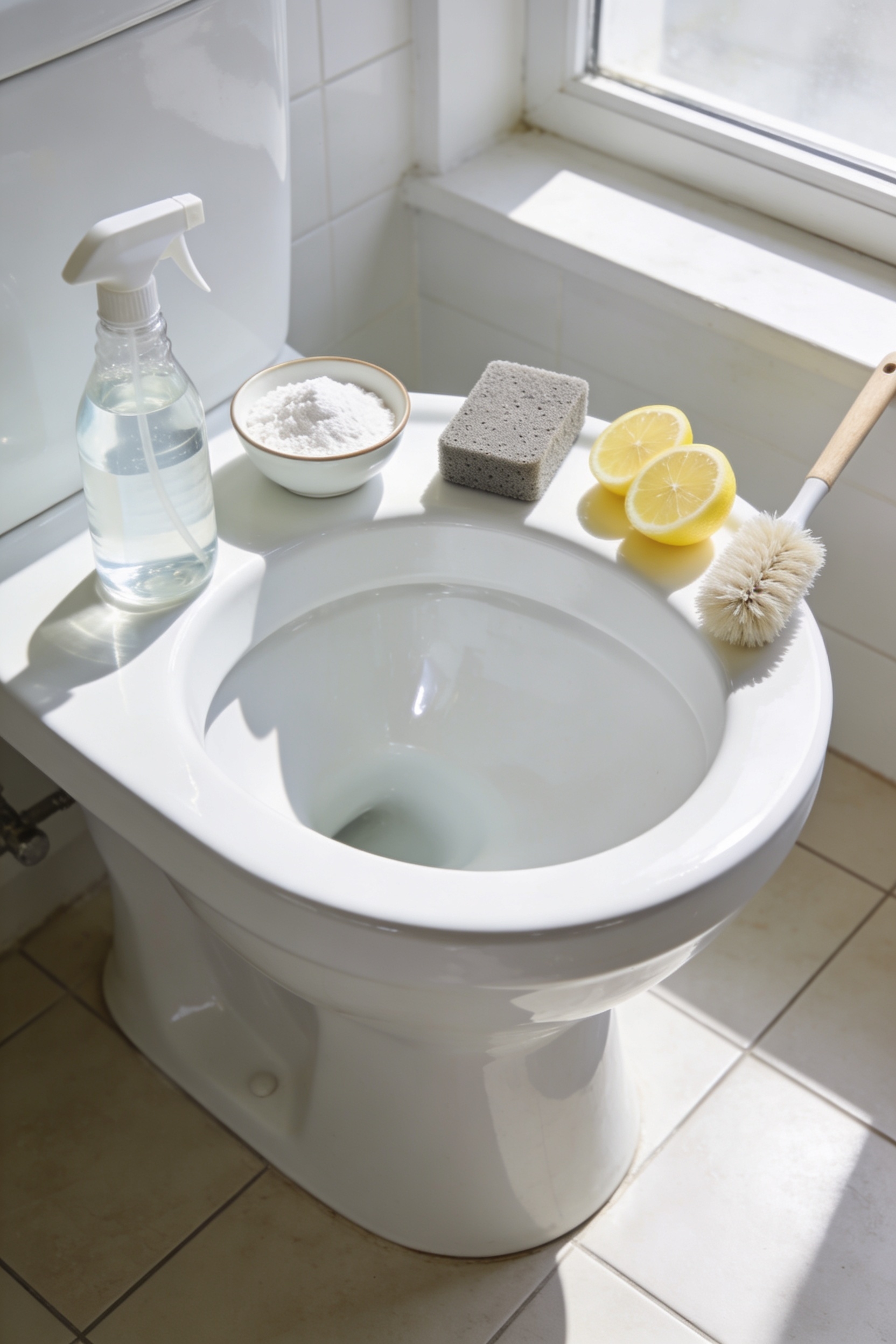
Remove Yellow Toilet Stains: Top 5 Solutions

I’m sure you’ve noticed those stubborn yellow stains creeping up your toilet bowl—the kind that won’t budge with a standard scrub. I’ve got five genuinely effective solutions for you: vinegar and baking soda work fast for mild buildup, borax and vinegar tackle hard water deposits, citric acid handles severe mineral stains, hydrogen peroxide bleaches away yellowing, and water softeners prevent the whole mess from recurring if you’re stuck with hard water. Each approach works differently depending on what’s actually causing your stains.
Key Takeaways
- Vinegar and baking soda create a fizzing reaction that breaks down mineral deposits causing yellow stains in toilets.
- Borax mixed with vinegar for 20–30 minutes effectively removes hard water stains and mineral buildup from bowl surfaces.
- Citric acid spray dissolves minerals causing discoloration; allow dwell time before scrubbing for optimal results on severe stains.
- Hydrogen peroxide acts as a bleach alternative; pour one cup, wait 30 minutes, then scrub to remove yellow stains.
- Salt-based water softeners prevent yellow stains by replacing calcium and magnesium minerals at the source with ion exchange.
Vinegar and Baking Soda: Remove Yellow Stains Fast
Look, I’m sure you’ve noticed those stubborn yellow stains creeping up the inside of your toilet bowl—the kind that seem to mock every casual swish of the brush you throw at them. Here’s the thing: vinegar and baking soda actually work, and I mean genuinely work, because you’re getting natural effervescence doing the heavy lifting for you.
Drain your toilet, slather white vinegar on those stains, and let it sit overnight if you’re dealing with something gnarly. Then dump in a cup of baking soda and watch that fizzing reaction break down the mineral deposits. The natural effervescence tackles what your brush alone can’t handle, plus you get odor neutralization as a bonus. For tough buildup, consider that citric acid formulations are equally effective at removing rust, mineral deposits, and lime without harsh chemicals. Scrub, flush, and you’re done. No sketchy chemicals, just chemistry working in your favor.
Recommended Products

Made in U.S.A with high quality material

PURE Borax! Never adulterated, no additives, preservatives, or fillers.

Quickly Removes Rust, Dissolves Organic Stains And Cleans Hard Water Residue
Borax and Vinegar for Stubborn Hard Water Stains
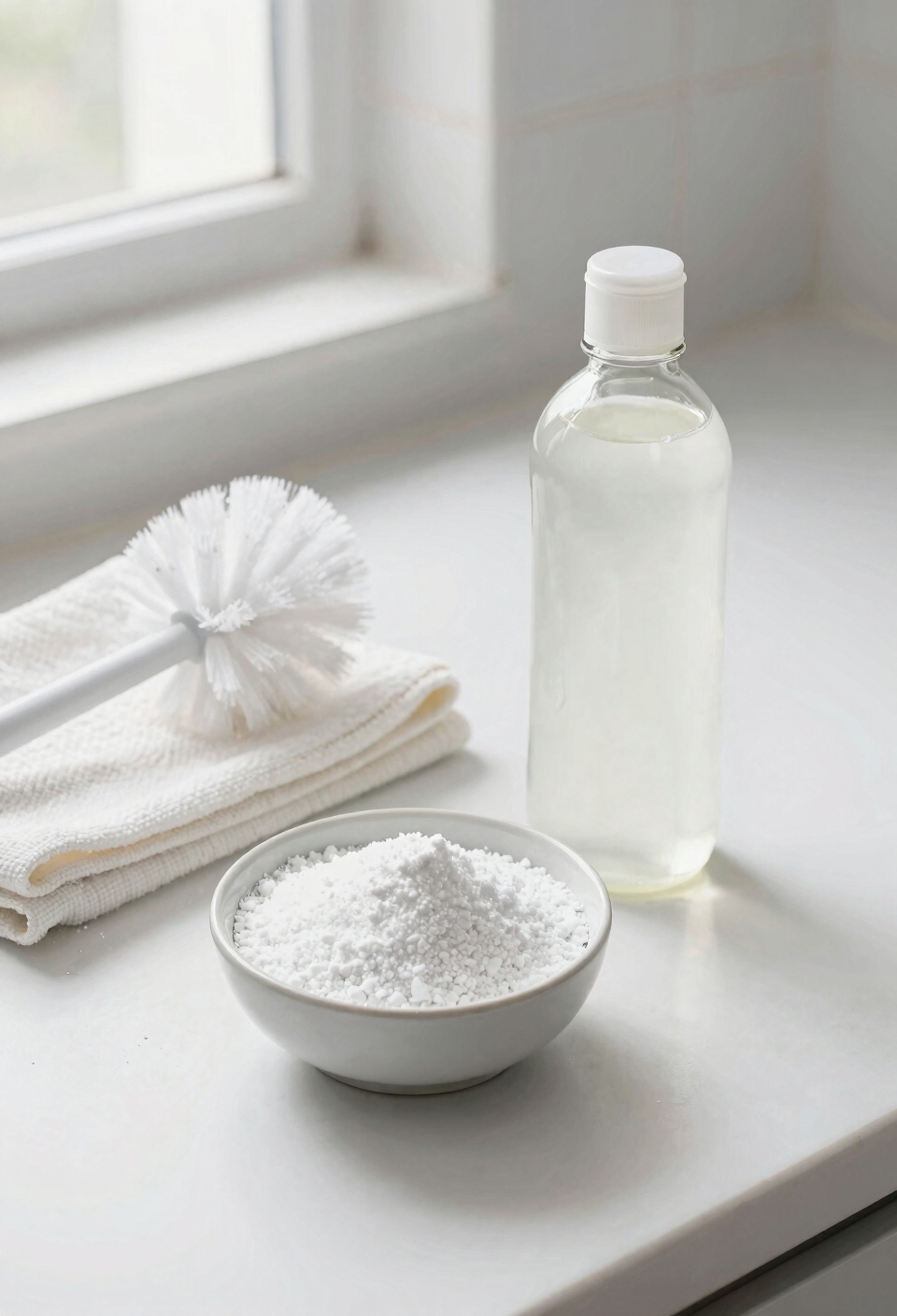
When those yellow stains have basically fused themselves to your toilet bowl and vinegar alone isn’t cutting it, borax steps in as your heavy-duty backup. I’m sure you’ve noticed hard water stains don’t budge easily — that’s because calcium and magnesium deposits are stubborn as they come.
Here’s what you do: flush to wet the bowl, pour a quarter cup of borax, spread it around with your brush. Now add one to two cups of white vinegar and let it sit for twenty to thirty minutes. Application timing matters here since you’re giving those minerals time to break down.
Scrub away what’s left, flush twice, and you’re done. If borax alternatives interest you, citric acid works similarly for mineral deposits. The Pink Stuff toilet cleaner offers a foaming powder formulation designed specifically to target stains, limescale, and grime for deep-cleaning results. This method’s genuinely effective for hard water stains.
Recommended Products

Borax is a dry household or preparation ingredient
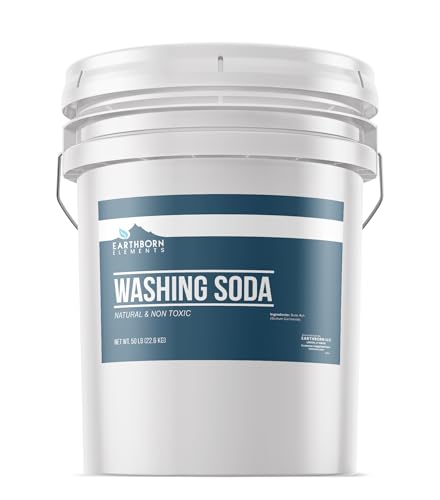
Earthborn Elements Washing Soda in a bulk bucket size

Luonix Borax in a resealable bucket
Citric Acid: Heavy-Duty Mineral Deposit Removal
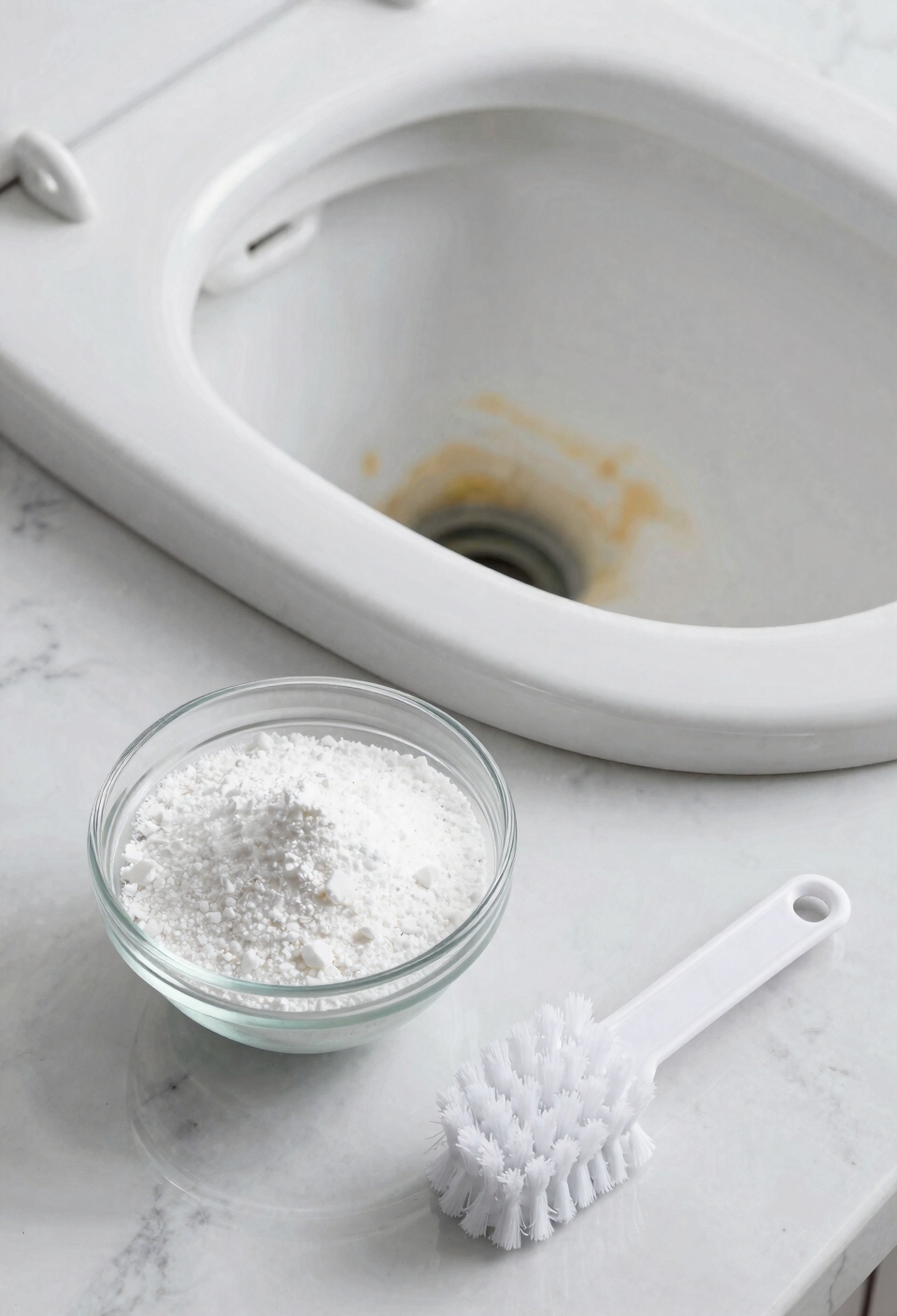
If borax’s got you thinking about other heavy hitters in the mineral-busting department, citric acid’s your answer — and honestly, it might be even better at this particular job. You fill a spray bottle with warm water, dissolve citric acid until it’s completely gone, then spray it directly into the bowl or pour it straight in for severe stains. Let it sit and break down those mineral deposits, scrub with your brush, and flush. I’m sure you’ve noticed this stuff works every single time on yellow toilet stains. Safety precautions matter though — wear gloves, keep it away from kids, and don’t mix it with other cleaners. For environmental disposal, dilute any leftover citric acid solution thoroughly before pouring down the drain. Biodegradable descalers with citric acid minimize environmental impact and harmful runoff while effectively tackling tough hard-water deposits.
Recommended Products

100% PURE: Our citric acid is a food grade, 100% pure ingredient with excellent solubility for cooking, cleaning and many other household needs!


SINGLE INGREDIENT - All natural granular citric acid in fine crystals. Food-grade, premium quality assured and tested. NEVER contains any fillers, preservatives, or impurities!
Hydrogen Peroxide for Severe Yellow Stains
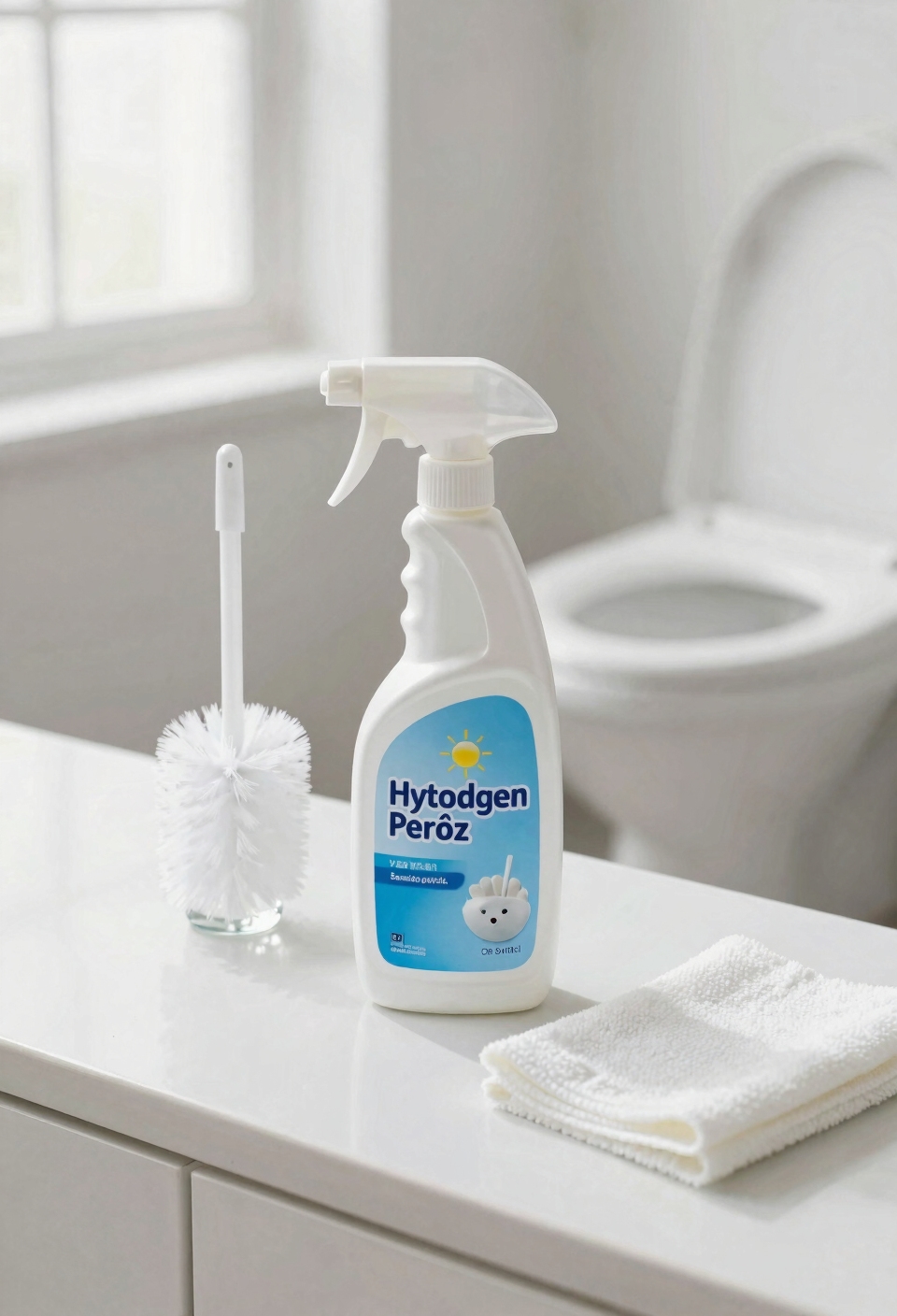
Now, hydrogen peroxide‘s the heavy artillery when citric acid’s already given those stubborn stains a good fight but they’re still hanging on — and I’m sure you’ve noticed that some yellow discoloration just won’t quit no matter what you throw at it. Pour a full cup of hydrogen peroxide around the bowl’s interior, then let it sit for about thirty minutes. This bleach alternative works without those harsh chemical fumes that make you reconsider your life choices. Scrub away the loosened deposits with your toilet brush, and if anything’s still clinging there like a bad habit, sprinkle some baking soda on top and scrub again. For optimal results with hard water stains, allow 15–20 minutes of contact time before scrubbing to ensure the hydrogen peroxide fully breaks down mineral deposits. Flush multiple times to clear everything out. Honestly, hydrogen peroxide paired with enzyme cleaners gives you serious stain-fighting power without the toxicity concerns.
Recommended Products
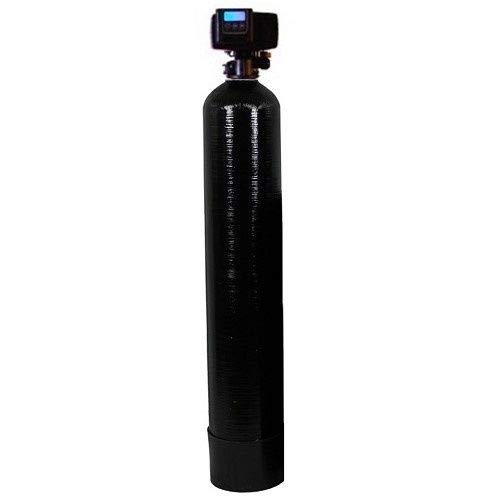
Advanced Filtration System: DuraWater Black Series Digital air injection system designed for comprehensive water treatment
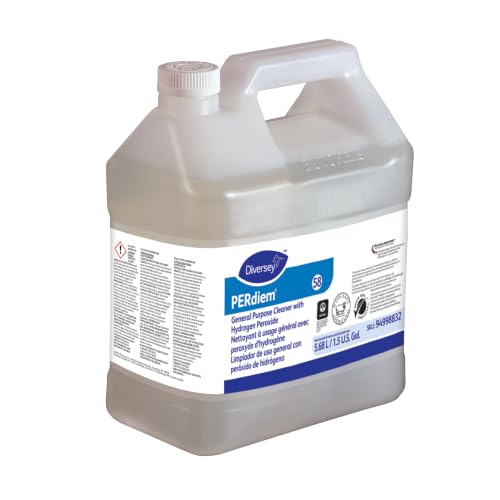
VERSATILE CLEANING POWER - Cleans floors, bathrooms, glass, counters, walls and other hard surfaces with Accelerated Hydrogen Peroxide technology, helping remove everyday soils and residue in commercial facilities, offices, schools, healthcare and hospitality environments.

VERSATILE CLEANING POWER - Cleans floors, bathrooms, glass, counters, walls and other hard surfaces with Accelerated Hydrogen Peroxide technology, helping remove everyday soils and residue in commercial facilities, offices, schools, healthcare and hospitality environments.
Water Softeners: Stop Yellow Stains From Returning
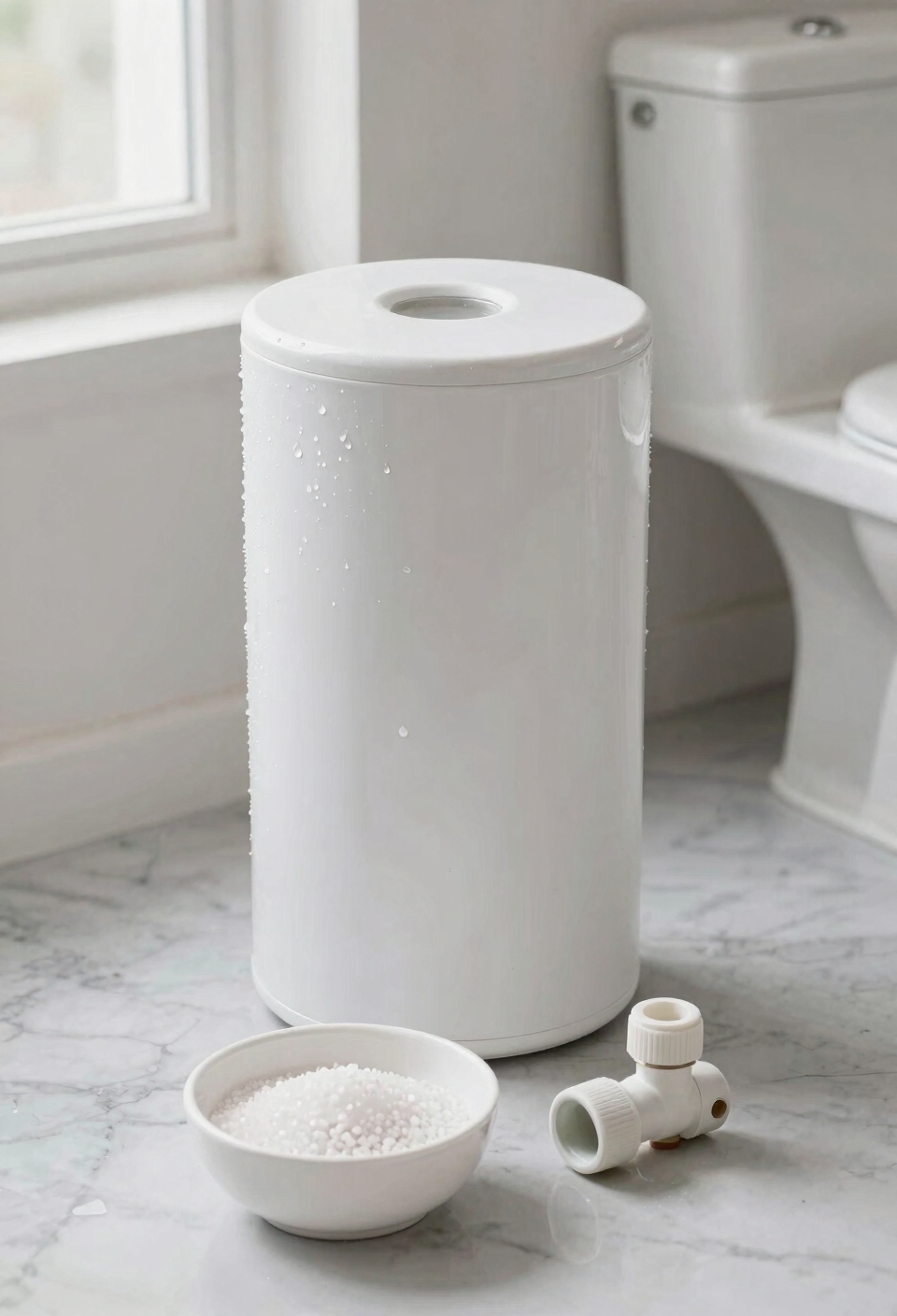
All right, so you’ve scrubbed your toilet clean with hydrogen peroxide and baking soda, and yeah, those stains are gone—for now. Here’s the thing: if your water’s loaded with hard minerals, you’re fighting a losing battle every single month. I mean, you can keep scrubbing, or you can actually fix the problem at its source.
That’s where a salt-based water softener comes in. These systems use ion exchange to swap out calcium and magnesium—the culprits behind those stubborn yellow stains—for sodium instead. You’re essentially preventing mineral buildup before it even reaches your toilet. If you’ve got tannin issues causing brown stains, a chlorine injection system with carbon filtration handles that too. For households dealing with severe water quality issues or installations in challenging locations like basements, upflush toilet systems with integrated water management can also help mitigate staining problems by handling waste more efficiently.
Sure, system maintenance requires attention, but you’ll stop repeating this whole cleaning cycle monthly. Your future self will thank you.
Recommended Products

PROTECTS PLUMBING AND APPLIANCES FROM HARD WATER SCALE WITH ZERO WATER WASTE FILTERS DIRT, SAND, SILT, CLAY, RUST, AND OTHER DEBRIS WITH REUSABLE SEDIMENT FILTER CARTRIDGE CAN BE USED FOR HOMES WITH UP-TO 5 BATHROOMS EASY INSTALLATION, LOW MAINTENANCE 120-DAY SATISFACTION GUARANTEE

Salt-Free, Citrus-Based Softening: Uses CitraCharge technology to soften water without salt while retaining essential minerals, preventing scale buildup, and avoiding the slick feel of traditional salt-based systems.

Salt-Free Scale Prevention & Healthy Minerals Retention: Our Whole House Salt-Free Water Softener utilizes an advanced ion exchange resin to effectively inhibit scale formation throughout your home's plumbing and appliances. Unlike traditional softeners, it smartly retains beneficial calcium and magnesium minerals in your water, providing scale-free protection without removing healthy elements
Frequently Asked Questions
Can Cola Really Remove Yellow Toilet Stains, and Which Brands Work Best?
I’ve found cola effectiveness works because of its acidity, though brand comparison reveals all colas perform similarly. Any cola containing phosphoric acid will remove yellow stains; you’ll notice results within an hour or overnight.
How Often Should I Clean My Toilet to Prevent Yellow Stain Buildup?
I’d recommend weekly cleaning to prevent buildup, yet preventative treatments between cleanings work wonders. You’ll notice that regular maintenance stops stains before they start, while neglect allows yellow deposits to set stubbornly.
Are Chemical Toilet Bowl Cleaners Safer Than Natural Cleaning Methods?
I’d argue natural methods are safer regarding chemical risks, though they’re gentler on your health and plumbing. Both offer solid cleaning effectiveness—I choose natural solutions to avoid harsh fume exposure and environmental harm.
What’s the Difference Between Salt-Based and Salt-Free Water Softeners for Stain Prevention?
I’ll cut to the chase: salt-based softeners use ion exchange and salt regeneration to eliminate minerals entirely, while salt-free systems condition water without removing deposits. You’ll prevent stains better with salt-based models.
Can Yellow Toilet Stains Indicate a Serious Plumbing or Health Problem?
I’d recommend getting a plumbing inspection if stains persist despite cleaning, as they might indicate mineral buildup or pipe corrosion. For health concerns, a health screening can rule out urinary tract issues causing discoloration.
Conclusion
Look, I’ve basically weaponized my toilet against yellow stains, and you can too. Vinegar’s your starter weapon, but honestly, borax and citric acid? They’re the heavy artillery that’ll absolutely obliterate those stubborn mineral deposits like they never existed. Hydrogen peroxide handles the really gnarly stuff, and if you’re serious about prevention, a water softener‘s basically a bodyguard for your porcelain. Your toilet’ll thank you.