As an Amazon Associate, we earn from qualifying purchases. Some links on this site are affiliate links at no extra cost to you. Our recommendations are based on thorough research and editorial judgment.

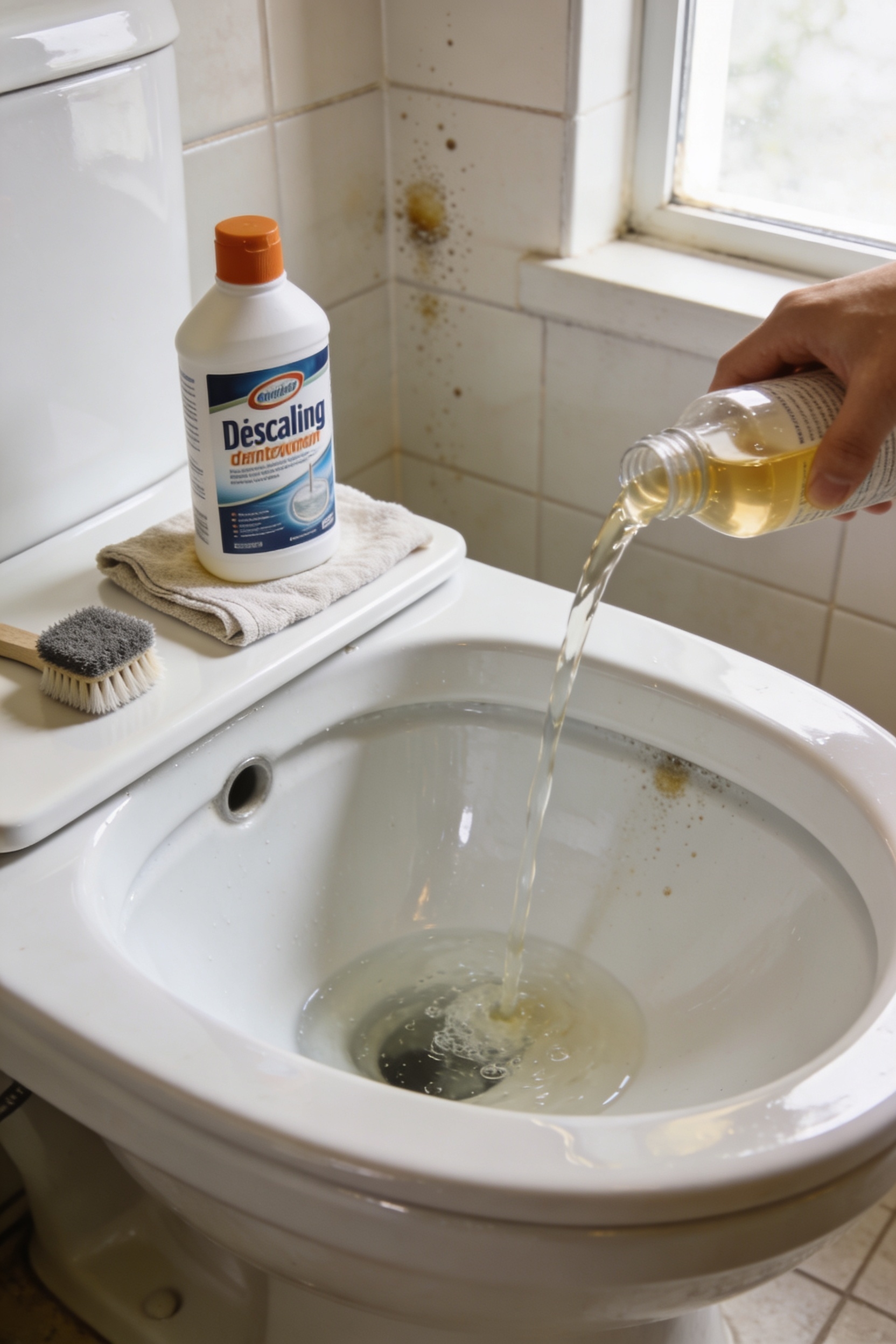
Shield Your Toilet From Stubborn Scale Forever

I’m sure you’ve noticed that stubborn limescale doesn’t just disappear on its own—it builds up relentlessly beneath the rim and around water jets where your brush can’t reach. Here’s the thing: you’ve got options. Start with vinegar and dish soap overnight, graduate to CLR if that fails, then grab a wet pumice stone for what chemicals alone won’t touch. The real secret? Monthly maintenance keeps scale manageable forever. But there’s more to know about which ingredients actually work and which ones you should skip entirely.
Key Takeaways
- Install a whole-house water softener in hard water areas to significantly reduce recurring limescale buildup permanently.
- Apply vinegar solution monthly and let sit overnight to prevent stubborn scale from accumulating in your toilet.
- Use pumice stones on wet surfaces to gently remove embedded mineral deposits before they harden permanently.
- Schedule regular monthly maintenance checks and treatments to keep limescale manageable and prevent intensive cleaning needs.
- Combine chemical softening with mechanical scraping for deposits resistant to bleach or standard cleaning methods.
Remove Limescale With Vinegar and Soap
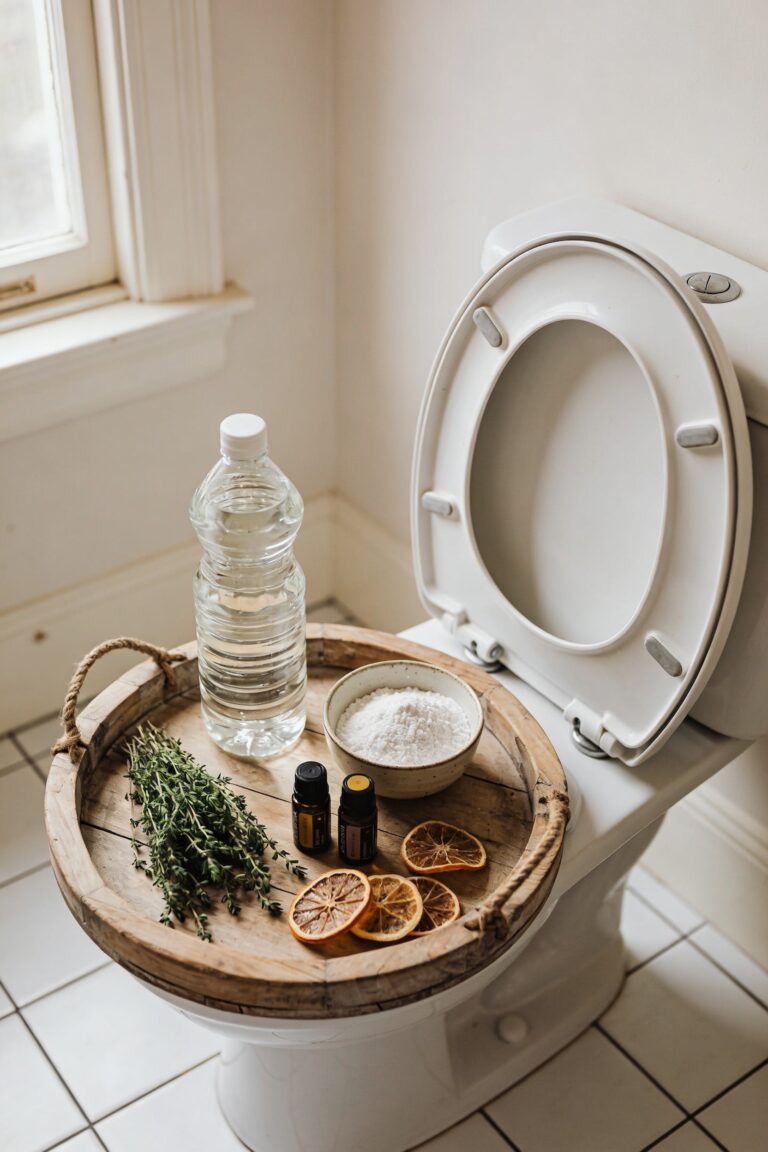
Look, I’m sure you’ve noticed that yellowish, crusty buildup creeping up the sides of your toilet bowl—that’s limescale doing what it does best, which is basically turning your porcelain into a mineral deposit collection. Here’s the thing: vinegar’s your secret weapon, and I’m not exaggerating. Mix a vinegar ratio of 10 ounces with 2 ounces of dish soap and a tablespoon of salt. Pour it straight onto the stains and let it sit overnight—no scrubbing required. The acid dissolves that mineral buildup like magic. If you’re looking for soap alternatives, honestly, any basic dish soap works fine. The vinegar does the heavy lifting anyway. You’ll wake up to a noticeably cleaner bowl, and your family gets a genuinely safe, non-toxic clean. For even better results, consider citric acid formulations, which are highly effective at removing limescale and hard water stains without harsh chemicals.
When to Use CLR: Application and Safety?
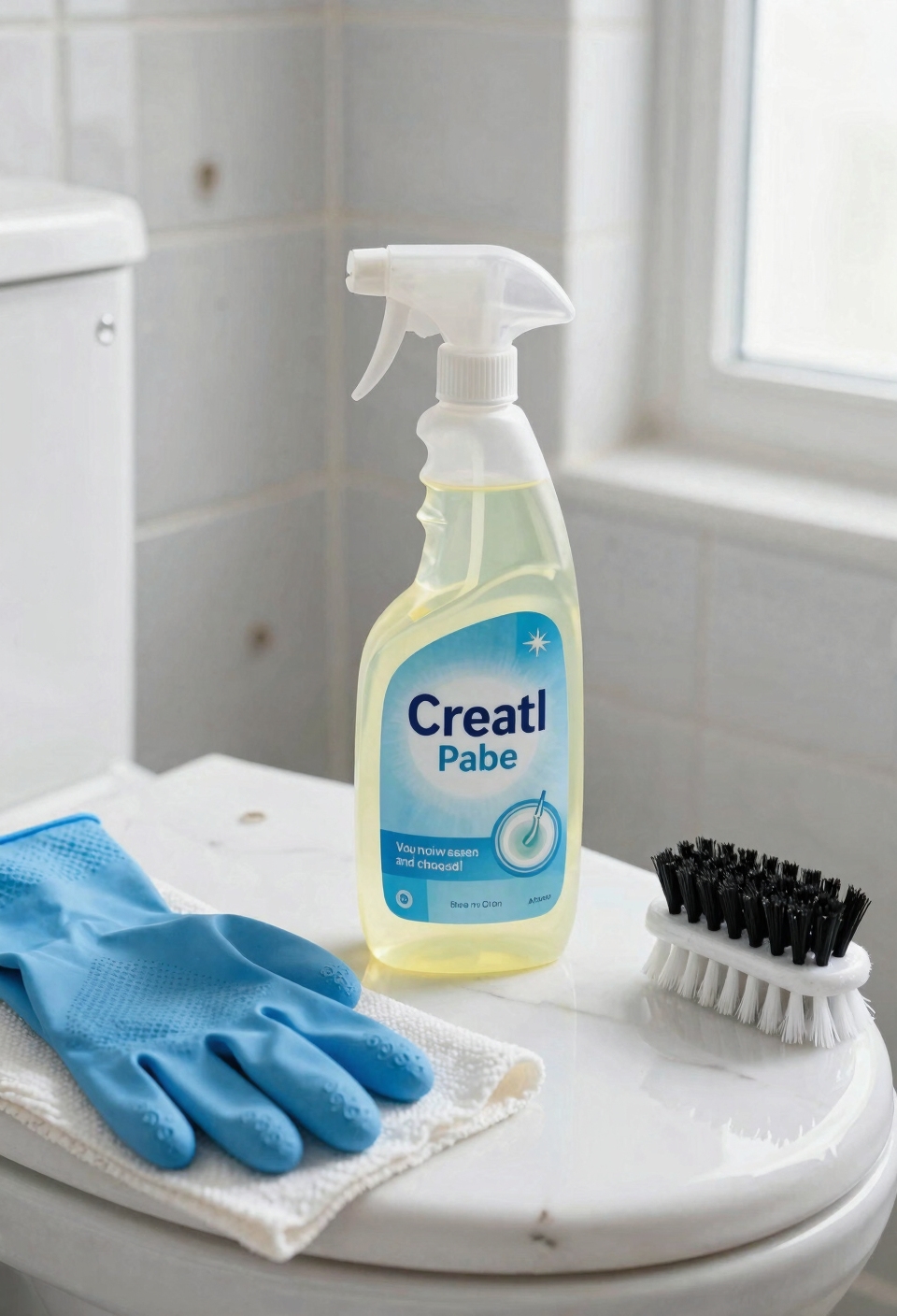
When vinegar and elbow grease aren’t cutting it anymore, you’ve got to bring in the heavy artillery—and that’s where CLR comes into play. Now, I’m not saying vinegar’s a failure—it works great for prevention—but CLR tackles those brown stains and mineral rings that laugh at household solutions. Here’s the thing: you’ll want to shut off your water supply and empty the bowl completely before applying it. Check chemical compatibility with your plumbing materials first; you don’t want surprises. Grab protective gear—gloves and maybe eye protection—because this stuff means business. CLR’s designed specifically for hard water deposits, so it’ll handle what vinegar couldn’t. Never mix CLR with bleach or ammonia products as this creates dangerous toxic gases. Just follow the label instructions and you’re golden.
Recommended Products

Industrial Strength: CLR PRO Calcium, Lime and Rust Remover is a non-toxic, multipurpose cleaner designed for bathrooms or bathroom related surfaces. It breaks down calcium, lime and soap scum to leave behind a streak-free shine

Powerful Clean: This powerful foam spray removes tough mold and mildew surface stains from tile, showers, bathroom surfaces, tents, hardwood floors, hard plastics, automobile tires, wood, grout and fiberglass

Industrial Strength: CLR PRO Calcium, Lime & Rust Remover is a multi purpose cleaner designed for facilities maintainence and can be used on a variety of surfaces; It breaks down calcium, lime and soap scum to leave behind a streak free shine
Pumice Stone Method for Stubborn Residue
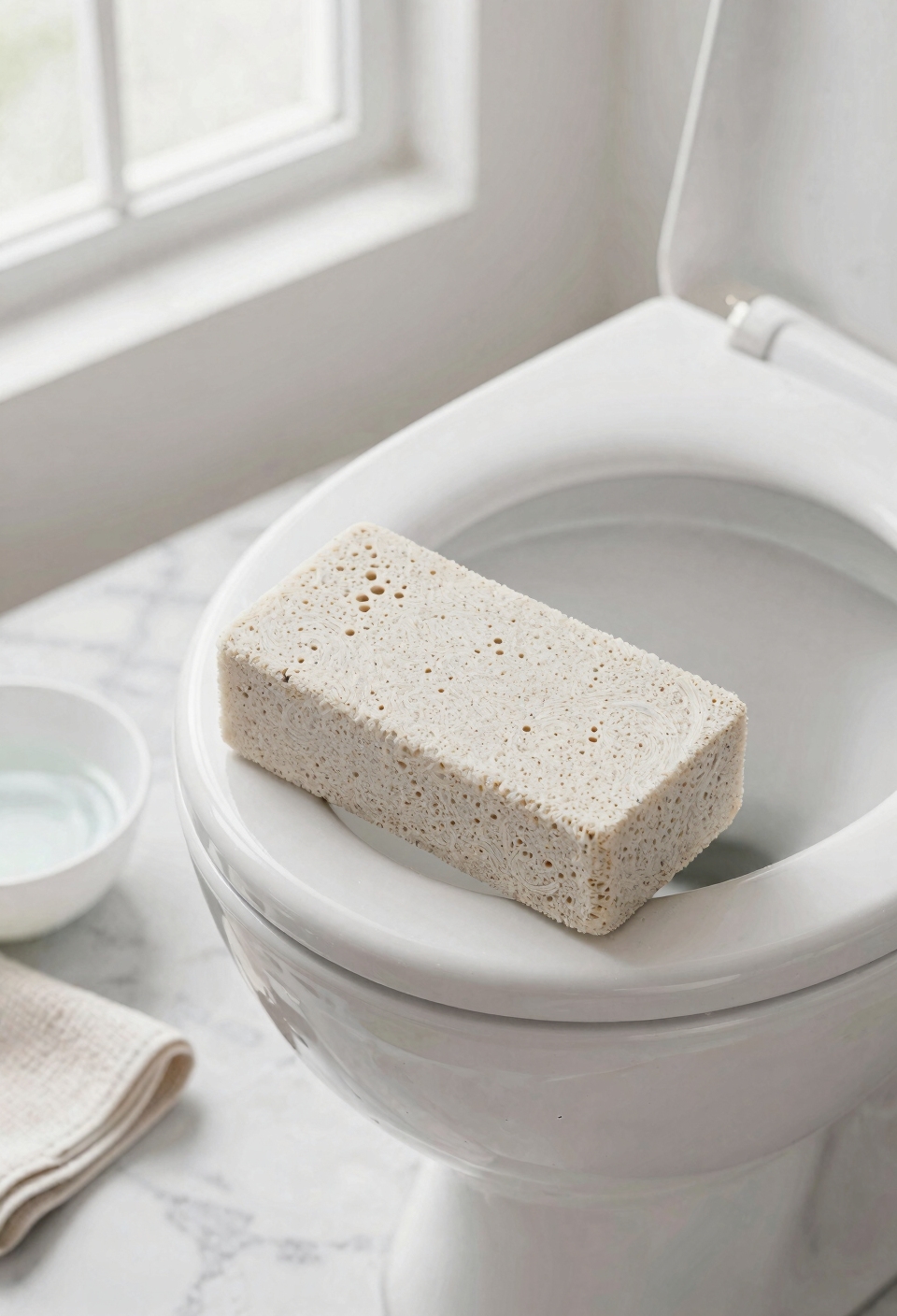
So you’ve soaked your toilet bowl with CLR, let it sit for the recommended time, and you’re staring at what’s left—those stubborn white rings and brown stains that are clinging to the porcelain like they’ve got a personal vendetta.
That’s where a wet pumice stone comes in. I’m sure you’ve noticed how non-abrasive it becomes when damp, making it perfect for porcelain without damage. Use angled techniques, approaching those problem areas under the rim and along the bowl’s sides from multiple angles. You’ll want to scrape deliberately but gently, letting the stone’s texture do the work. When used correctly with proper surface compatibility testing, pumice stones safely remove mineral deposits without scratching your porcelain surfaces.
Stone care matters too—rinse it thoroughly after use and let it dry completely. You’re basically employing mechanical removal as your final assault on embedded scale, and honestly, it works beautifully for that sparkling finish you’re after.
Recommended Products

Versatile Uses: pumice sticks can be applied to remove hard water rings from tile, clean kitchen and bathroom surfaces, and remove rust from grills; In addition, use them to scrub and clean rust, calcium, and lime buildup off of spa or pool tiling

Functions: pumice sticks can be applied to clean tile, to clean bathroom and kitchen, remove hard water rings, clean rust from grills; Besides, use them to clean and scour away lime, calcium and rust build up from the pool tile or on the spa

PACK OF 12 PUMICE POOL BLOCK - Unleash superior cleaning with our Pool Block—your go-to solution for unparalleled cleanliness. Power tackles tough challenges where ordinary cleaners fall short, making these pool bloks essential for a spotless environment. Specifically designed for swimming pools or toilet bowl cleaning, these pool blok double as powerful toilet bowl cleaners, ensuring a thorough and hygienic result, these sticks excel in targeted cleaning, perfect for stubborn stains and deposits.
Limescale Under Toilet Rims and Hard-to-Reach Spots
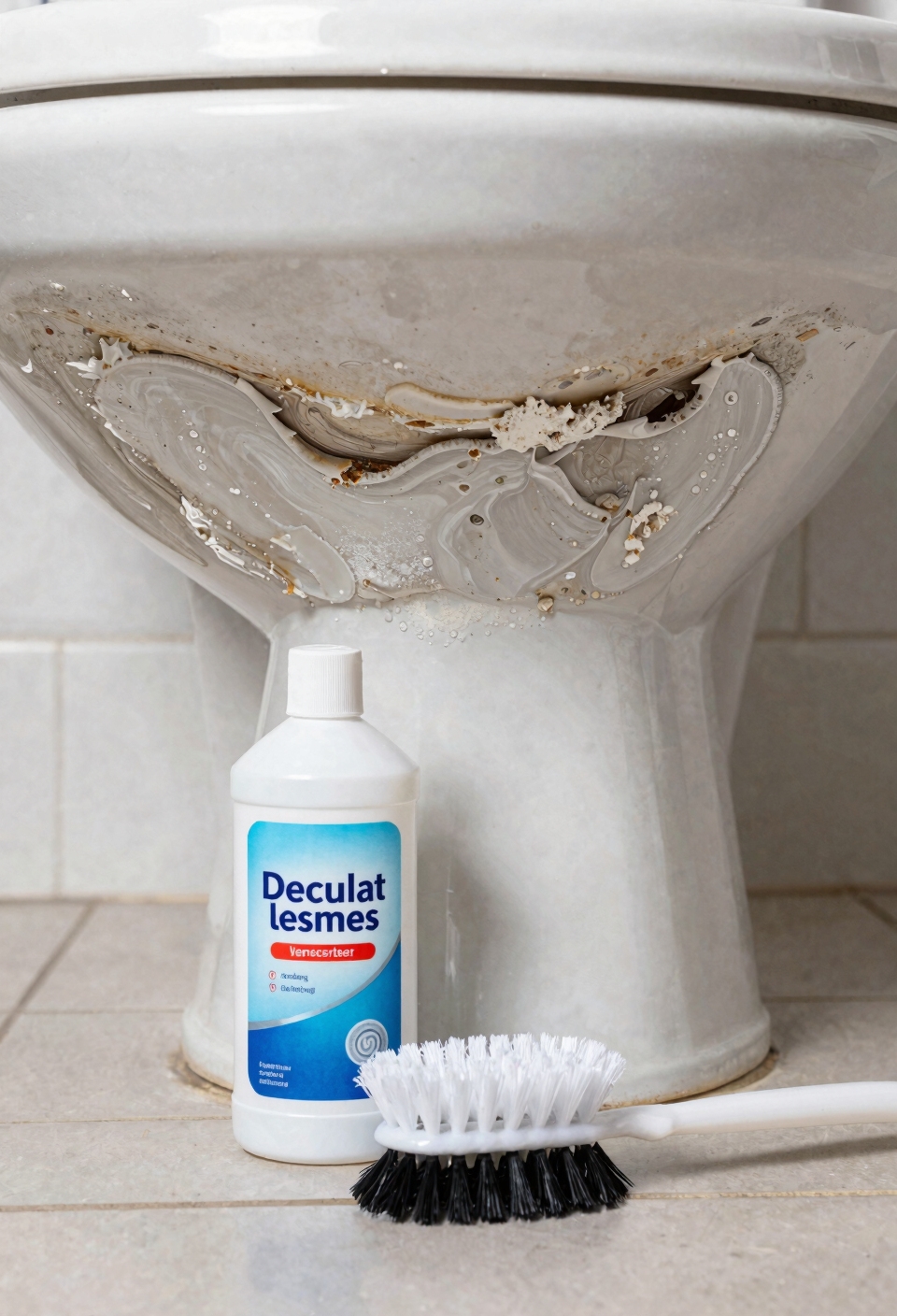
Targeting the grime that hides beneath your toilet’s rim is honestly where most people’s cleaning efforts go to die, and I get it—you can’t see it properly, you can’t reach it comfortably, and those mineral deposits have basically burrowed into the porcelain like they’ve paid rent. Here’s the thing: limescale loves settling around hidden jets and mounting bolts where water constantly flows but your brush can’t reach. That’s why I’m telling you to use angled-handle pumice stones—they’re your secret weapon for those impossible spots. Pumice stones work best when used wet and with gentle pressure to minimize surface damage. Soak the area first with vinegar or CLR to soften deposits, then scrape at multiple angles. The combination of chemical softening plus mechanical removal tackles what bleach alone simply won’t touch, especially in hard water zones.
Recommended Products

Functions: pumice sticks can be applied to clean tile, to clean bathroom and kitchen, remove hard water rings, clean rust from grills; Besides, use them to clean and scour away lime, calcium and rust build up from the pool tile or on the spa

Bulk Toilet Cleaning Set: you will receive 100 pack pumice stone for toilet cleaning, enough for daily cleaning, deep cleaning and replacement needs, the bulk toilet bowl cleaner sticks are suitable for homes, offices, hotels, apartments and cleaning services

PACK OF 6 PUMIE SCOURING STICKS – Includes two heavy-duty cleaning pumice stones designed for deep cleaning where ordinary products fail. Effectively removes limescale, mineral deposits, rust buildup, and baked-on grime, making it a must-have tool for tackling the toughest messes in kitchens, bathrooms, and utility spaces
Monthly Prevention: Stop Scale Before It Returns
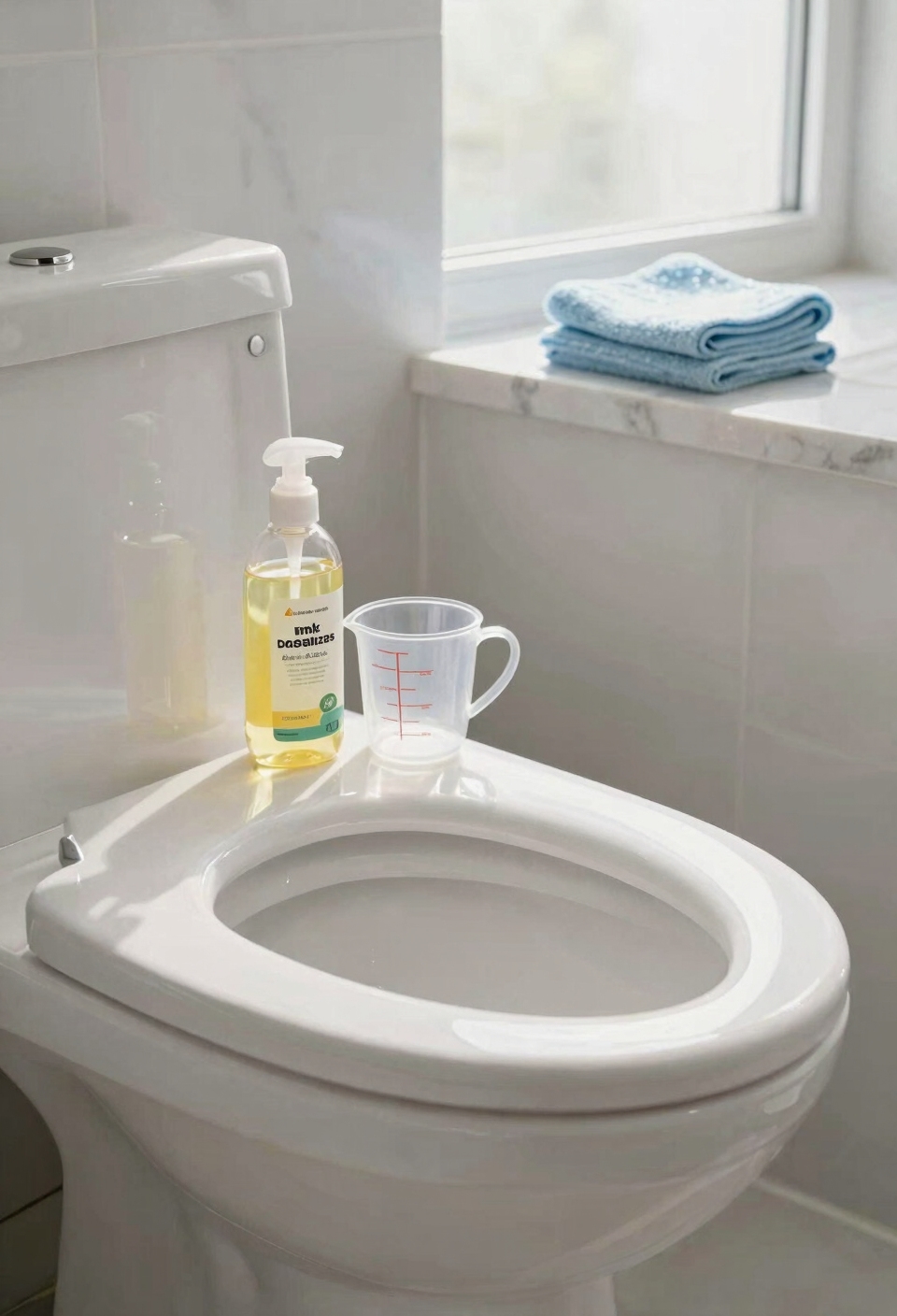
All right, here’s the thing nobody wants to hear: you can spend an afternoon scrubbing under the rim with a pumice stone and vinegar, get that toilet sparkling clean, and then just let it slide back into limescale hell over the next six weeks if you’re not paying attention. I mean, prevention’s where the real win lives. Schedule checks monthly—seriously, mark your calendar—and hit it with that vinegar mixture before scale even thinks about returning. In hard water areas, you might consider a water softener for your whole system, which honestly saves you from constant bathroom maintenance. But even without one, monthly treatments keep things manageable. Just pour that ten-ounce vinegar blend, let it sit overnight, and you’re basically telling limescale to stay the hell away. For stubborn mineral buildup between cleanings, plant-based cleaners with natural antimicrobial action can maintain that fresh toilet without the harsh chemicals. It’s lazy genius.
Recommended Products

Salt-Free, Citrus-Based Softening: Uses CitraCharge technology to soften water without salt while retaining essential minerals, preventing scale buildup, and avoiding the slick feel of traditional salt-based systems.
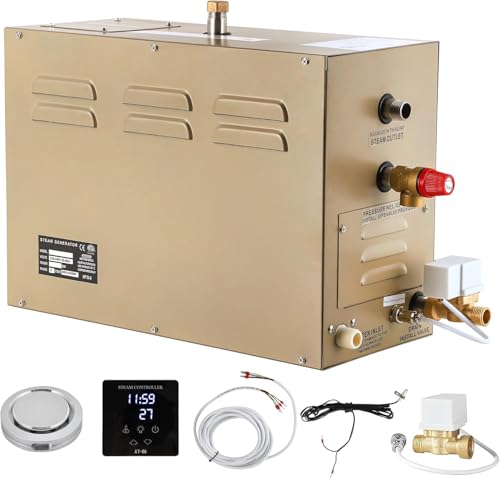
PERFECT PERFORMANCE - Perfect steam experience is exactly what we had in mind with steam generators. Quickly produce a consistent flow of soft and smooth steam thanks to the cleverly designed dual tank technology ,while minimizing any distracting operational noises.

Commercial-Grade Urinal Drain Fix – Backed by 40 years of formulation expertise, Crete is a professional urinal drain descaler designed to break down accumulated uric acid and calcium deposits commonly found in high-traffic restroom environments. Supports proper drain maintenance and consistent system performance
Frequently Asked Questions
What Causes Limescale to Form More Quickly in Some Households Than Others?
I’ve found that limescale builds up faster in my home because I’ve got harder water with higher mineral content. Your household habits—like how often you flush and water usage—also affect accumulation speed markedly.
Is Limescale Harmful to My Health or Just a Cosmetic Issue?
While limescale appears as your toilet’s unwelcome guest, it’s primarily cosmetic. However, I’d note that buildup can harbor bacteria, posing minor health risks if neglected long-term, though surface cleaning usually prevents concerns.
Can Limescale Damage My Toilet’s Plumbing or Pipes Over Time?
Yes, limescale can damage your plumbing over time. I’ve seen it cause pipe corrosion and flow restriction, which reduces water pressure and potentially leads to costly repairs if you don’t address buildup regularly.
Why Doesn’t Regular Bleach Work Effectively Against Limescale Deposits?
Bleach is like a sword against water—it cuts through bacteria but bounces off mineral deposits. Bleach’s chemistry targets organic matter, not the calcium buildup. Limescale needs acidic surface interaction, which vinegar provides instead.
How Long Does It Take to See Results From Vinegar Treatments?
I’ve found you’ll see results overnight with vinegar treatments. For best outcomes, I recommend applying the solution before bed and checking your toilet in the morning. Consistent application frequency—monthly in hard water areas—prevents future buildup.
Conclusion
I’m not gonna lie—keeping limescale at bay is like playing defense in a sport where the opponent never stops showing up. But here’s the thing: you’ve got the tools now. Vinegar, prevention, and a monthly routine? That’s your winning playbook. Stick with it, and you’ll dodge those stubborn deposits before they dig in. Your toilet will thank you, and honestly, so will your sanity.