As an Amazon Associate, we earn from qualifying purchases. Some links on this site are affiliate links at no extra cost to you. Our recommendations are based on thorough research and editorial judgment.

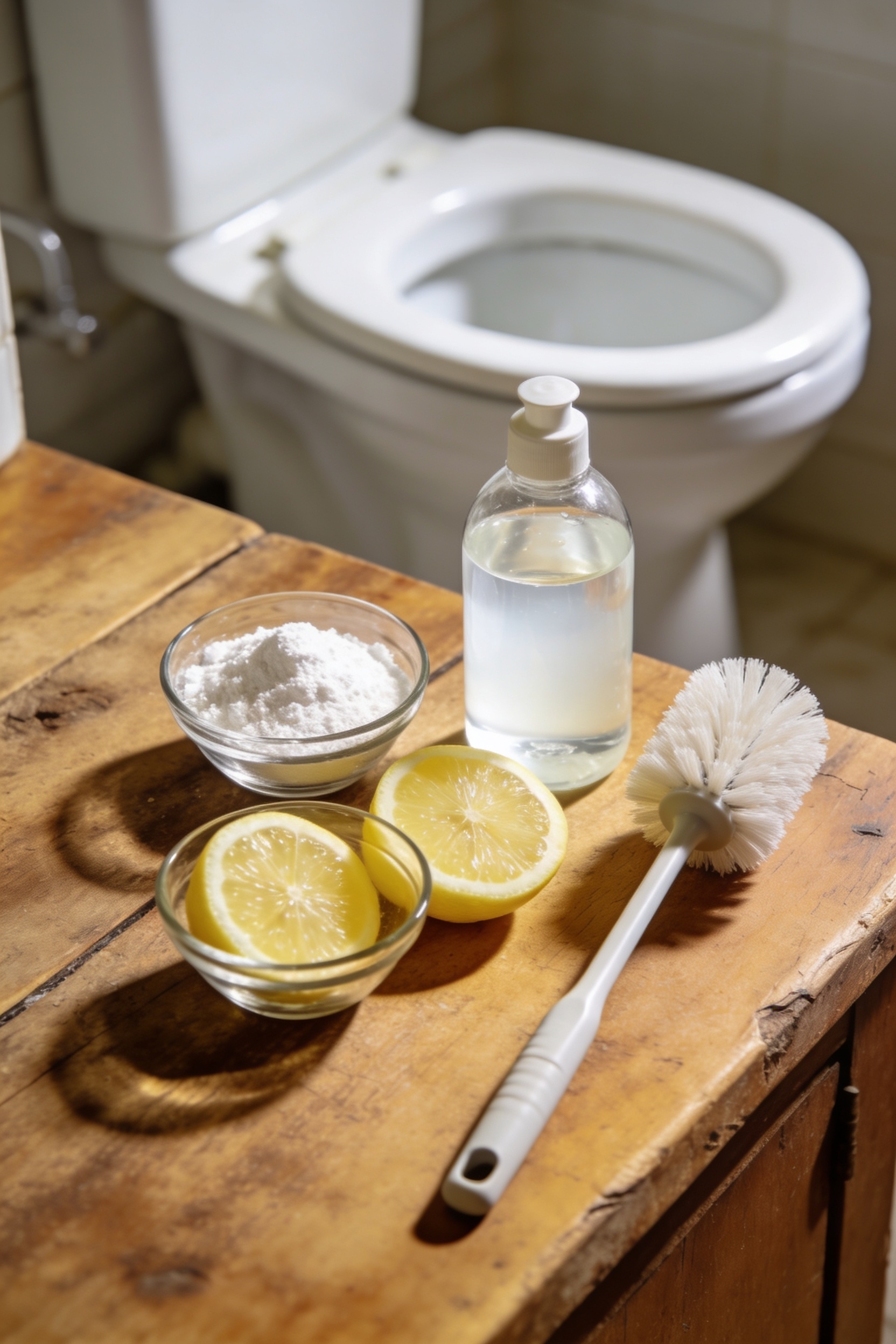
Best Safe Toilet Bowl Cleaners From Kitchen Ingredients

You don’t need those nasty chemical cleaners sitting under your sink when you’ve probably got everything you need right in your kitchen. Baking soda, vinegar, and citric acid are genuinely effective at tackling hard water rings, rust streaks, and mold—honestly, they’ll outperform most commercial stuff without the toxic fumes. Mix baking soda with castile soap or pair it with vinegar for that fizzing scrubbing action, then hit stubborn mineral deposits with citric acid and hot water. The real trick is dwell time and knowing which ingredient targets what, which is exactly where the specifics get interesting.
Key Takeaways
- Baking soda and castile soap create an effective toilet cleaner; mix with water and essential oils for antimicrobial action.
- Citric acid dissolves mineral deposits and hard water rings; apply with hot water and allow 15+ minutes dwell time.
- Baking soda and vinegar fizz reaction provides powerful scrubbing action; sprinkle mixture, add vinegar, and let sit 15 minutes.
- Essential oils like tea tree and lavender add antimicrobial potency and natural fragrance without harsh chemical fumes.
- Kitchen-derived cleaners are biodegradable, environmentally safer alternatives that provide comparable effectiveness to chemical toilet bowl descalers.
Make Safe Toilet Bowl Cleaners From Kitchen Ingredients
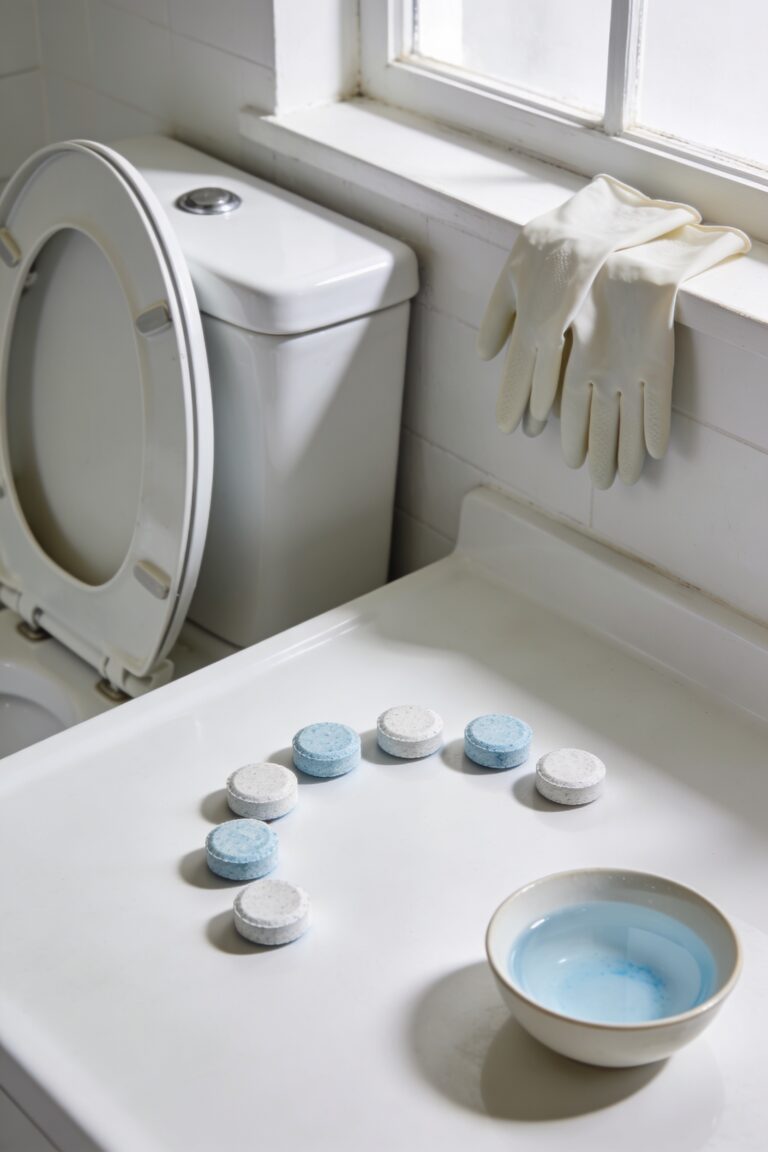
Look, I’m sure you’ve noticed that most commercial toilet cleaners come with warnings plastered all over them like they’re about to launch a chemical weapon, and honestly? You can skip all that. I’ve found that kitchen sourced disinfectants actually work better than anything you’d buy in a plastic bottle. Here’s the thing: baking soda, vinegar, citric acid, and castile soap—stuff you probably already have—they’re genuinely effective at breaking down stains and killing bacteria. Beyond performance, there’s the eco friendly packaging choices angle. You’re storing these in glass jars instead of contributing to plastic waste. Unlike tablet-based systems that provide continuous cleaning for weeks, homemade cleaners give you complete control over ingredients and application frequency. The recipes I’m sharing aren’t complicated; they’re just combinations of ingredients that actually do what they’re supposed to do without making your bathroom smell like a chemical factory.
Safely Mix and Store Your Cleaner
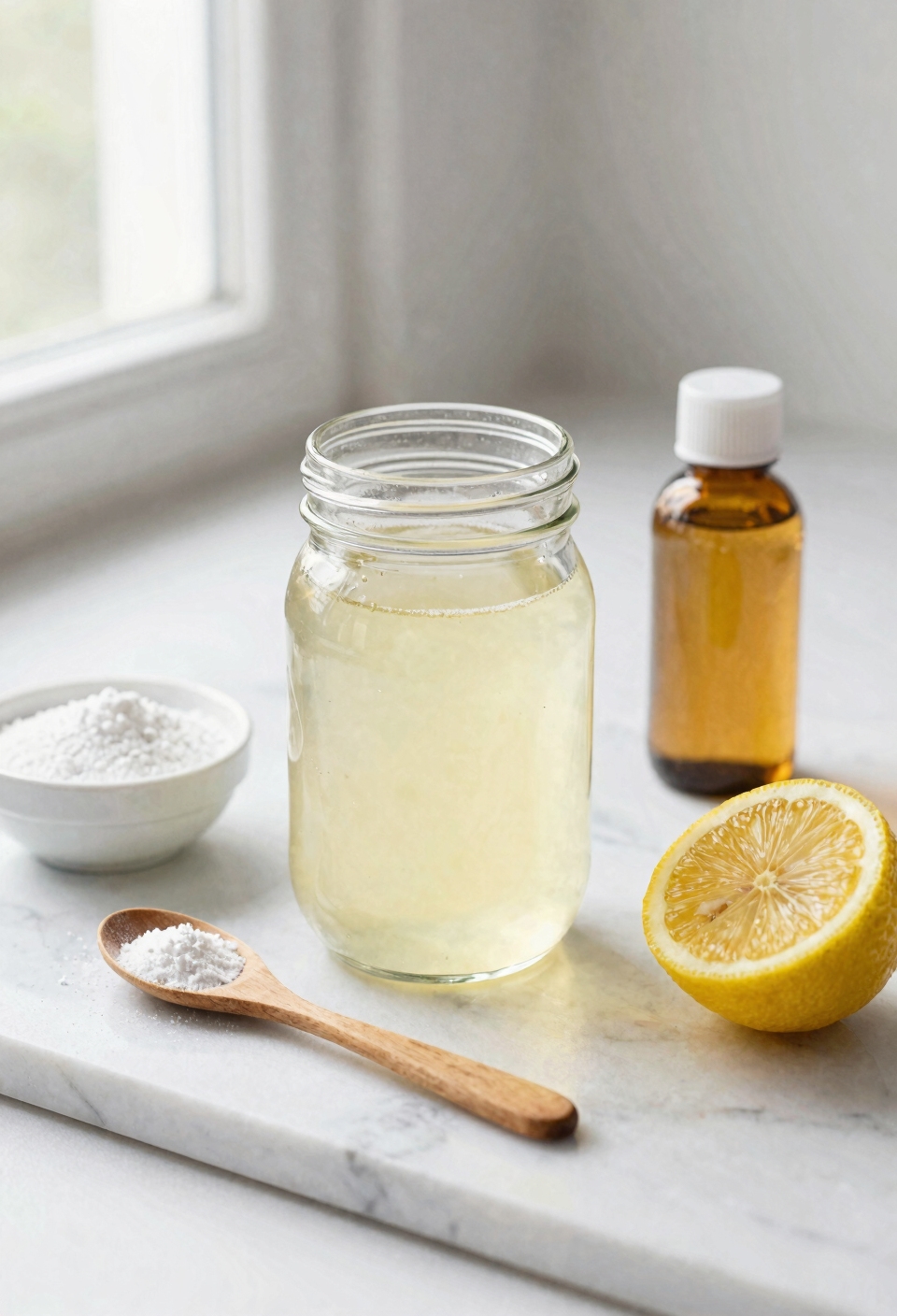
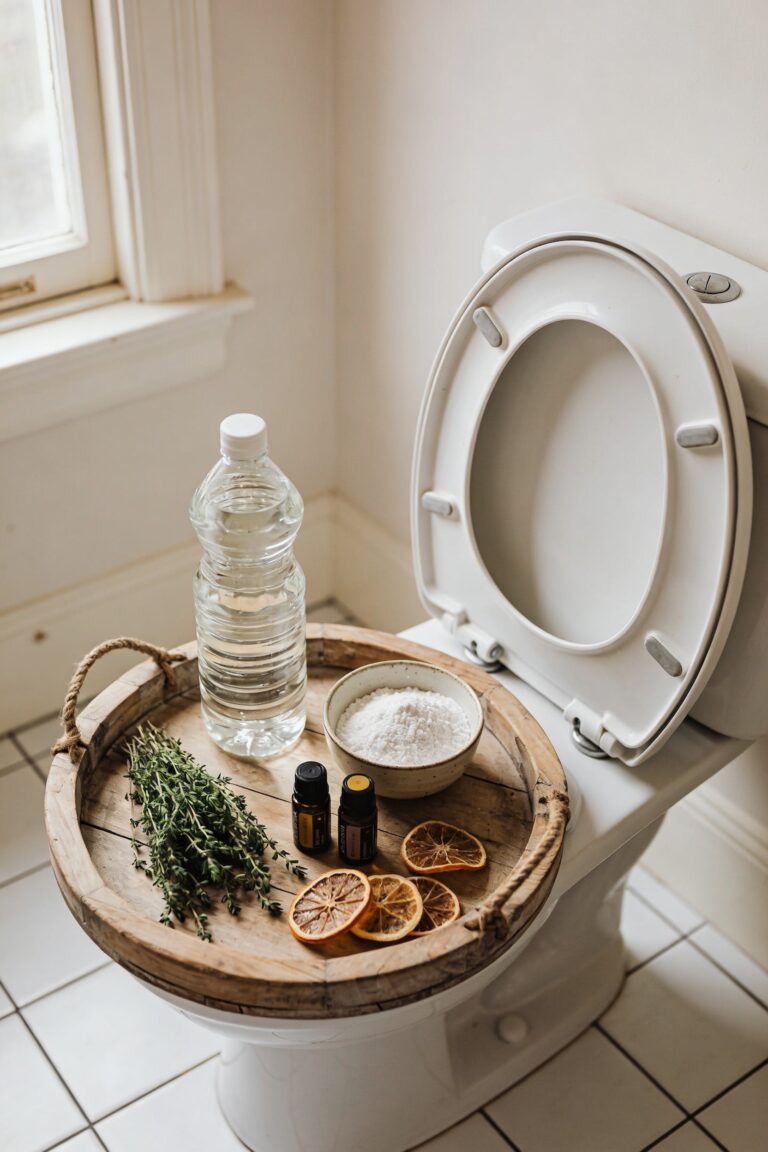
Since you’re already mixing up these kitchen ingredients instead of grabbing another bottle of that blue stuff with the skull-and-crossbones vibe, you’ve got to actually pay attention to how you’re combining them—because yeah, some of these recipes will fizz and react in ways that’ll either make your cleaner work better or just waste your ingredients in a disappointing puddle. I’d strongly recommend mixing baking soda and essential oils in glass bowls with wooden spoons; metal and plastic can cause unwanted reactions. Store your dry powders in childproof glass jars away from moisture and direct sunlight for temperature stability. Keep liquids separate from powders until you’re ready to use them. Label everything clearly, because I’m sure you’ve noticed how easy it is to forget what you mixed three weeks ago. Glass containers beat plastic every time—they’re safer, more stable, and they won’t degrade over time. Remember that natural ingredients like citric acid can provide antimicrobial action without harsh chemicals, making your homemade toilet cleaner both effective and environmentally responsible.
The Baking Soda and Castile Soap Solution
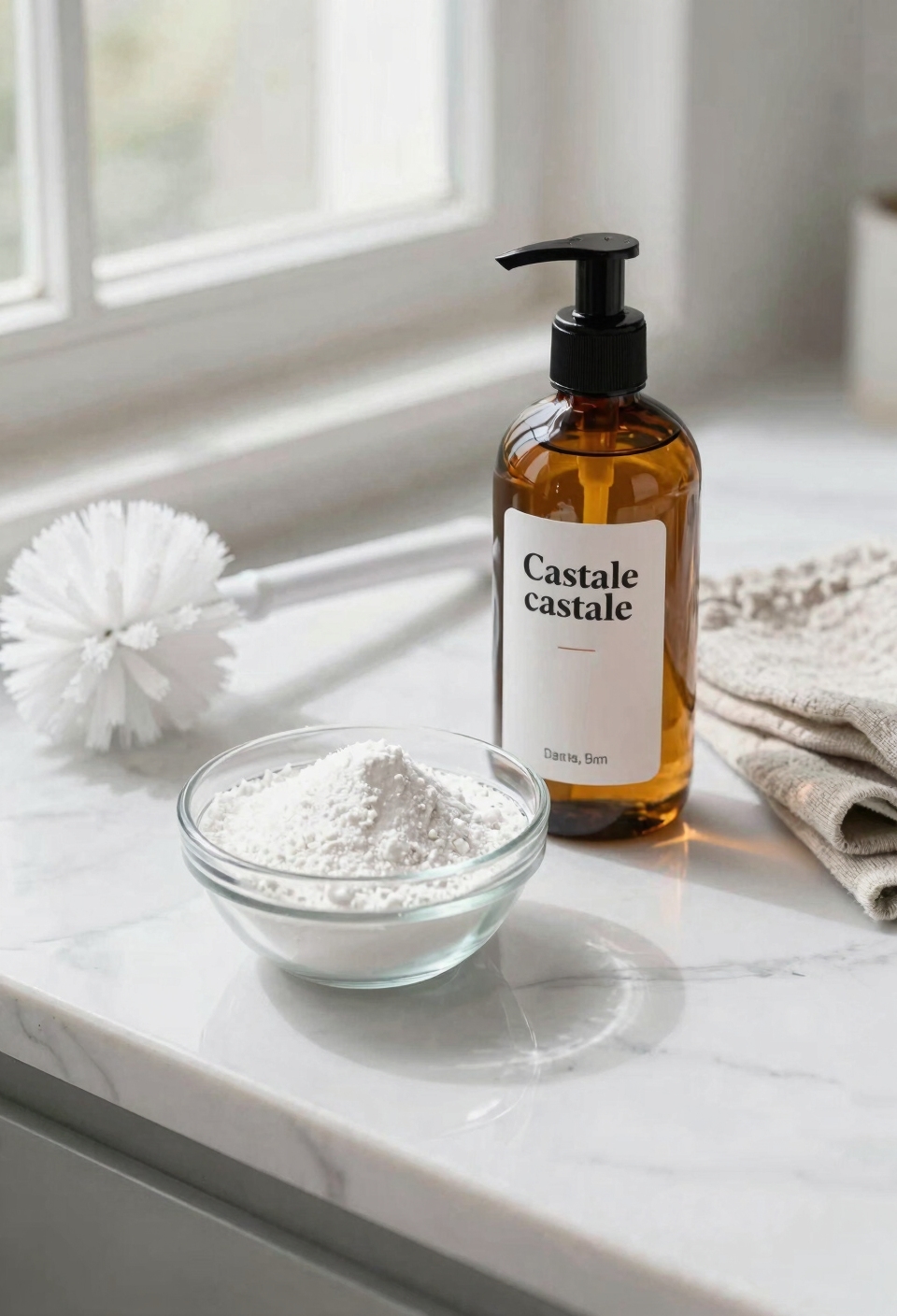
If you’re looking for a toilet bowl cleaner that actually works without requiring you to wear a hazmat suit, the baking soda and castile soap combo is probably the most straightforward route you can take—and I mean that literally, since the recipe’s dead simple: one cup of distilled water, half a cup of baking soda, and half a cup of liquid castile soap, mixed together and you’re done. The distilled water prevents bacterial growth, baking soda lifts stains and deodorizes, while the vegetable-based castile soap handles dirt and germs. You can boost foam stability by adding 15 to 30 drops of essential oils—lavender or tea tree work great. For best results, allow 10-15 minutes of dwell time before scrubbing to give the natural ingredients time to break down stains effectively. Store it in a spray bottle with clear bottle labeling so nobody mistakes it for something drinkable, and you’ve got yourself a genuinely effective cleaner that won’t harm your septic system.
Recommended Products

We have created a household cleaner that is hypoallergenic & contains no chlorine, perfume or dye.

PURE INGREDIENTS: Our sodium carbonate washing soda is 100% pure ingredients with zero additives and has excellent solubility to meet your multiple cleaning needs!

Powerful Laundry Booster: Enhance your detergent's effectiveness by adding ½ cup of Harris Washing Soda per load to tackle tough stains, brighten whites, and soften fabrics.
Homemade Baking Soda and Vinegar Fizzing Recipe
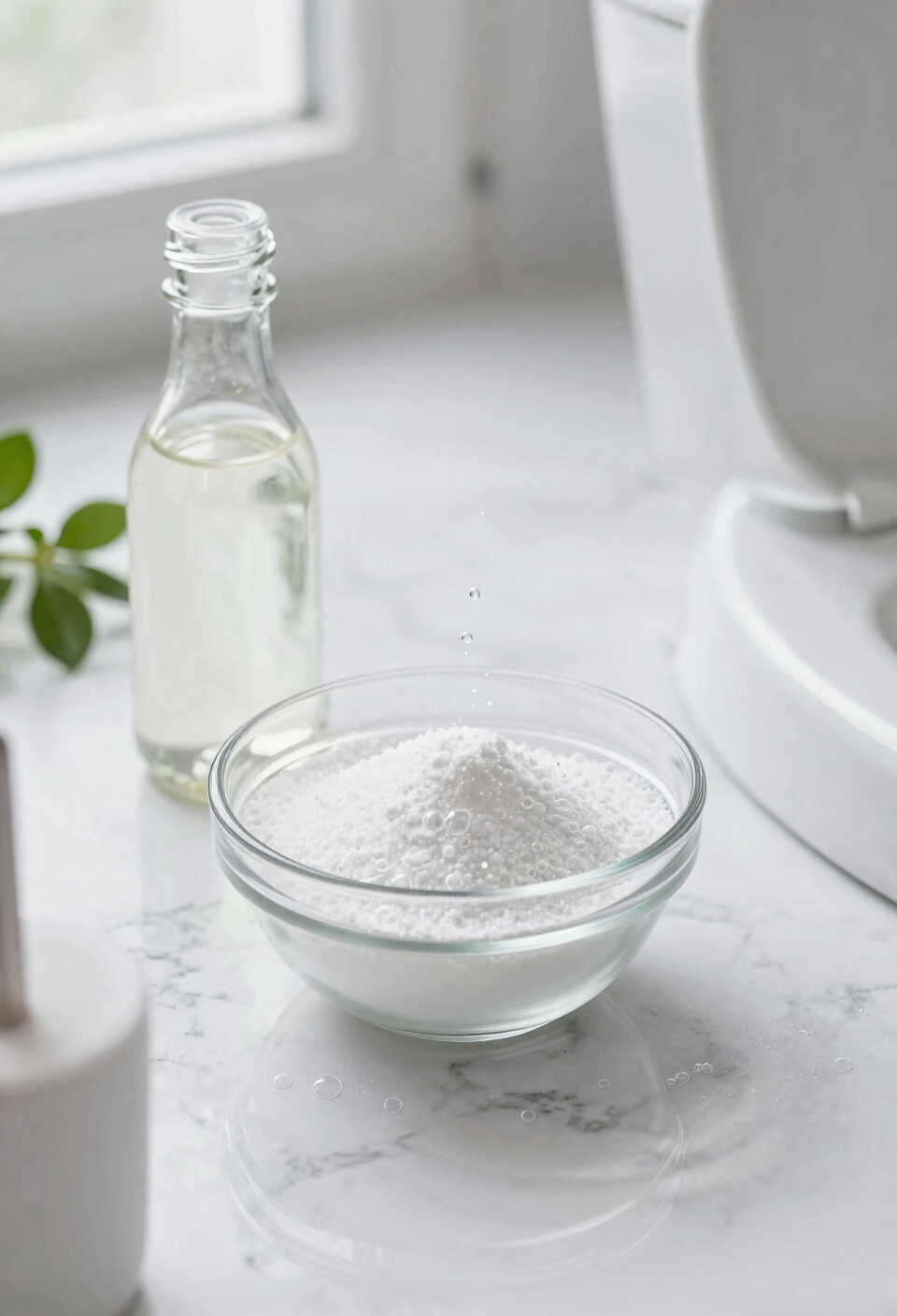
Now, here’s where things get a little more theatrical—and I mean that in the best way possible. You’ll mix two cups baking soda with half a cup of white vinegar, then add about a hundred drops of essential oil. The fizz mechanics here are genuinely satisfying—that chemical reaction between the baking soda and vinegar creates serious scrubbing power you can actually see happening. Sprinkle a tablespoon around your bowl, scrub it down, then add vinegar to trigger that fizzing action. Let it sit fifteen minutes before flushing. I’m sure you’ve noticed how that fizz actually lifts stubborn stains. Obviously, vinegar alternatives like citric acid work too, but honestly? That visible reaction makes you feel like you’re actually accomplishing something, which matters more than you’d think. Unlike foaming powder products, this homemade mixture gives you complete control over ingredients and allows you to customize the cleaning strength to match your specific stain severity.
Recommended Products

PURE Borax! Never adulterated, no additives, preservatives, or fillers.

Quickly Removes Rust, Dissolves Organic Stains And Cleans Hard Water Residue

Fast-acting solution quickly kills bacteria from surfaces
Citric Acid: The Mineral Deposit Fighter
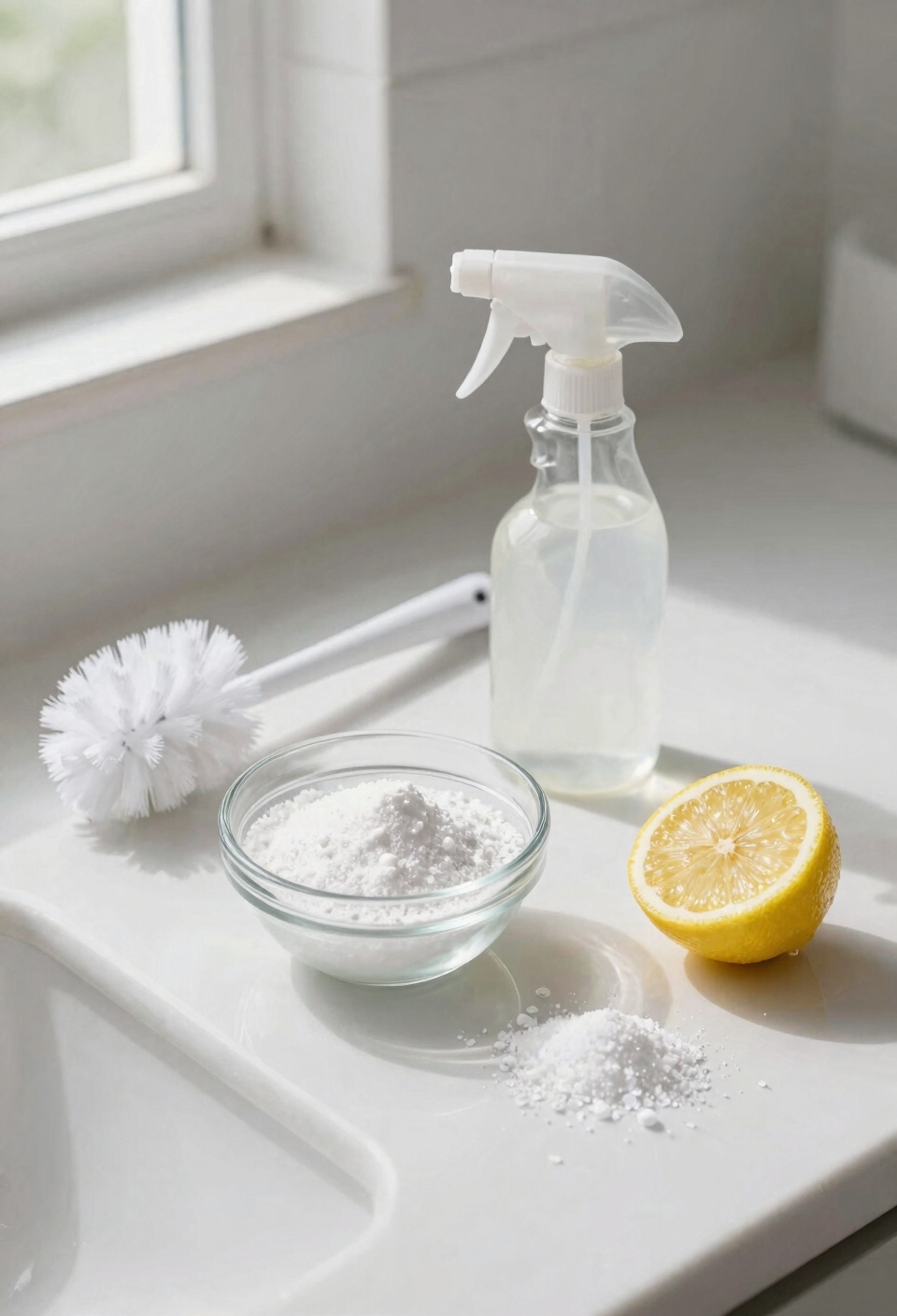
Here’s where citric acid enters the chat as your actual secret weapon against the crusty, chalky buildup that hard water leaves behind—and I mean it absolutely demolishes mineral deposits in ways that baking soda alone just can’t quite match. I’m sure you’ve noticed those stubborn rings that won’t budge no matter how hard you scrub.
Two tablespoons of powdered citric acid poured directly into your bowl, then scrubbed with a brush for full contact, kicks off the mineral dissolution process. Pour hot water over it, let it sit fifteen minutes or longer for serious buildup, and watch that hard water residue break down. Beyond stain prevention and bleaching action, citric acid actually kills bacteria while you’re at it. For heavy buildup, consider extending your dwell time to match the effectiveness of full-strength formulations used in commercial products. Store your powder in a glass jar—it’s legitimately effective and genuinely safe for your family.
Recommended Products

Use on toilet bowls and urinals to clean common restroom soils, rust deposits and scale

THIS PRODUCT CAN REMOVE DIRT, URINE AND HARD WATER DEPOSITS - and for regular toilet cleaning, spray the cleaner sparingly beneath the edge of the bowl and scrub with the brush. This product is completely eco-friendly.

CLINGS TO BOWL SURFACES - Thick liquid clings below the water line for targeted cleaning
Which Essential Oils Work Best for Your Cleaner
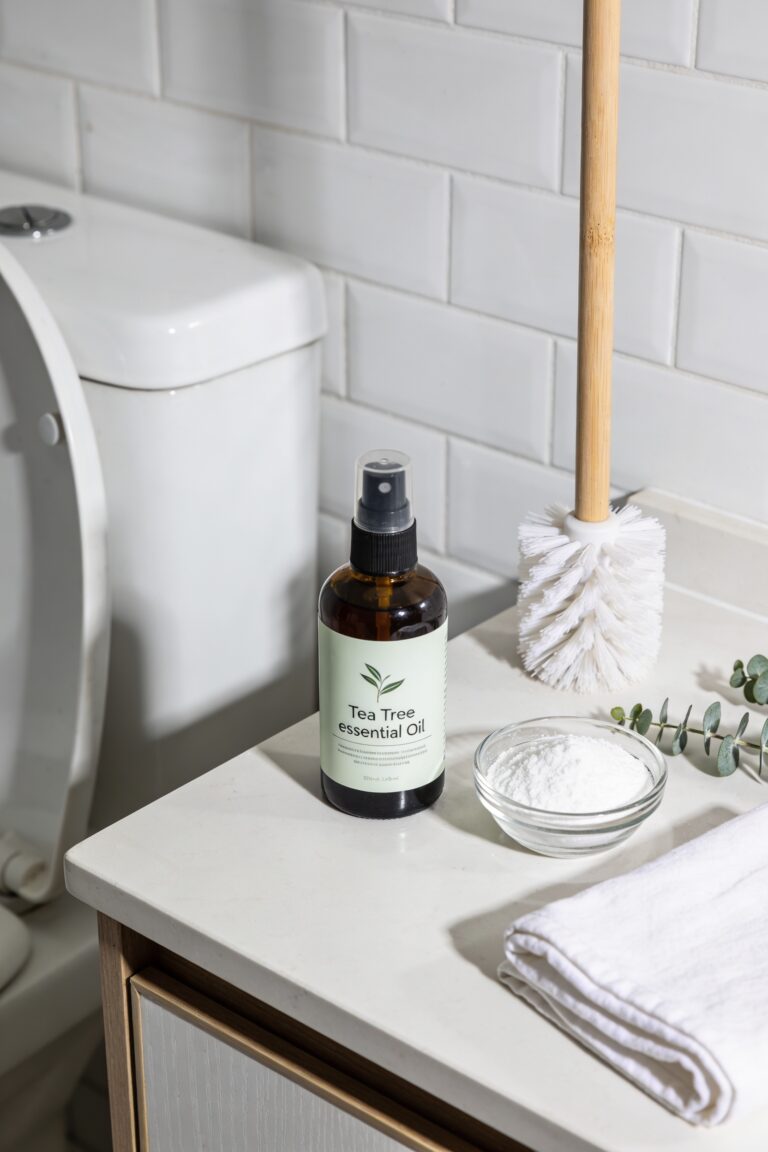
While citric acid handles the mineral warfare beautifully, you’re probably wondering what actually makes these homemade cleaners smell decent instead of like you’ve dumped a science experiment down your toilet—and that’s where essential oils come in. I’m sure you’ve noticed that peppermint, lavender, grapefruit, and tea tree oils show up in most recipes, and there’s legit reasoning behind that. These oils deliver real aromatherapy benefits while pulling double duty with antimicrobial potency that actually matters. Tea tree’s your heavy hitter for bacteria and mold, while lavender keeps things fresh without being aggressive. Peppermint brings that clean-smelling punch most people expect. You’re looking at 15-30 drops per batch—enough to mask the vinegar funk without overwhelming your bathroom, which I appreciate. Leading brands like Ecover and Better Life have perfected plant-based formulas with essential oils that combine natural fragrance with genuine cleaning power, proving that homemade versions can rival commercial products.
Recommended Products

✔️【 HIGHLY ABSORBENT, EASY TO CLEAN 】Clean smarter not harder. These super soft, non-abrasive microfiber cloths pack a punch. Cleans deep, but won't damage delicate surfaces. Perfect for dusting, scrubbing, polish and drying your entire home, office and car with less effort! Works great with home, kitchen and for car/auto detailing.

No Rinse Body Wipes: Our Wipex Embody Wipes for adults offer a convenient no rinse solution for hygiene, making them ideal shower wipes for post-exercise or car camping essentials. Perfect for athletes seeking a quick refresh without the need for water.

Compact & Convenient Dimensions: Maximize your space with this compact corner shower bench, designed to fit seamlessly into your shower or bathroom corner. Its thoughtful dimensions make it the prime solution for tight spaces, providing seating, corner shelf and bathroom storage without overwhelming the room. Ideal for any bathroom organizer needs!
Remove Hard Water Rings, Rust, and Black Mold Stains
These stubborn stains—hard water rings that won’t quit, rust streaks creeping up from the waterline, and black mold that thrives in the bowl’s damp corners—they’re the real test of whether your homemade cleaner’s actually worth the effort, and I’ll be straight with you: the recipes I’ve already walked you through handle the easy stuff just fine, but you’re going to need some targeted firepower for the nasty stuff that’s been settling in your toilet for months.
That’s where citric acid becomes your best friend. Two tablespoons of powdered citric acid tackles rust removal and mold prevention simultaneously. Pour it in, scrub thoroughly with your brush, then pour hot water over everything and let it sit for fifteen minutes. The acid breaks down mineral deposits and kills the bacteria feeding that black mold. For serious buildup, you might need a second application, but honestly, this stuff works. Biodegradable descalers with citric acid minimize environmental impact while delivering the same powerful cleaning results as harsh chemical alternatives.
Recommended Products

TOILET BOWL CLEANER: Clean and destroy stains including hard water, rust, lime scale and mineral deposits, and leave your porcelain toilet bowl looking shiny and new; Package may vary

The fine granular NON-GMO citric acid is a kitchen essential used in preserving, flavoring, and cleaning completely; preserves the Vitamin C content of a food product.

Sparkling toilet with no scrubbing
Frequently Asked Questions
Can I Use Tap Water Instead of Distilled Water in Homemade Toilet Bowl Cleaners?
I’d advise against it. Tap water contains mineral content and chlorine presence that’ll compromise your cleaner’s effectiveness. Distilled water’s neutral pH variability prevents bacterial growth, ensuring your homemade formula works most effectively.
How Long Do Homemade Toilet Bowl Cleaner Powders Remain Effective When Stored?
I’ll give you the straight scoop: your kitchen concoctions don’t last forever. Most homemade powder cleaners maintain their shelf life for six to twelve months when you store them in glass jars. After that, potency decline becomes noticeable, so I’d recommend reviving your batch.
Is It Safe to Use These Cleaners if I Have a Septic System?
Yes, I’d recommend these cleaners for your septic system. They’re made with septic safe ingredients like baking soda, citric acid, and castile soap that won’t disrupt bacterial balance. They’re all naturally biodegradable.
Can I Combine Multiple Essential Oils in One Batch for Enhanced Cleaning?
Yes, I’d recommend combining multiple essential oils for scent blending and potency synergy. Just mix them in glass first with your baking soda before adding other ingredients. This prevents unwanted reactions and maximizes their cleaning effectiveness together.
What Should I Do if Homemade Cleaner Causes Skin Irritation or Allergic Reactions?
I’d recommend you stop use immediately and rinse thoroughly with water. Wear gloves when cleaning, patch test first, and seek medical attention if irritation persists. Consult your physician about specific allergic reactions.
Conclusion
Look, I’ve thrown every kitchen ingredient at my toilet bowl, and you know what? Most of them actually work. Baking soda, vinegar, castile soap—they’re genuinely solid options that won’t poison your family or wreck your plumbing. Sure, you could grab commercial cleaners, but why spend extra money and worry about harsh chemicals when you’ve already got the good stuff in your pantry? Isn’t that just common sense?